Multimeters
With a multimeter, you measure current, voltage, and resistance. This allows you to quickly test a cable, component, or circuit. A multimeter is useful for electronics, installation work, and repairs.
For simple use, a digital multimeter is often sufficient. Many models automatically select the correct measurement range. This makes measuring faster and easier. Do you often work with AC voltage? Then a True RMS multimeter might be a better choice.
Do you want to measure current without disconnecting a cable? Then choose a clamp meter. For fixed testing locations, we also have bench multimeters. These offer a clear display and extensive measurement functions.
When making your choice, pay attention to the measurement range and functions. Also look at the accuracy, the count, and the safety class. Not every multimeter is suitable for every measurement.
Compare our multimeters and choose the model that suits your work. We offer models for hobbies, education, and professional use.
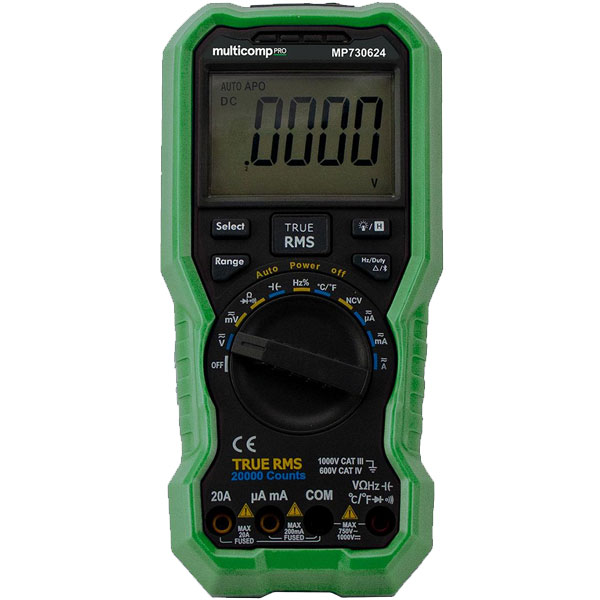
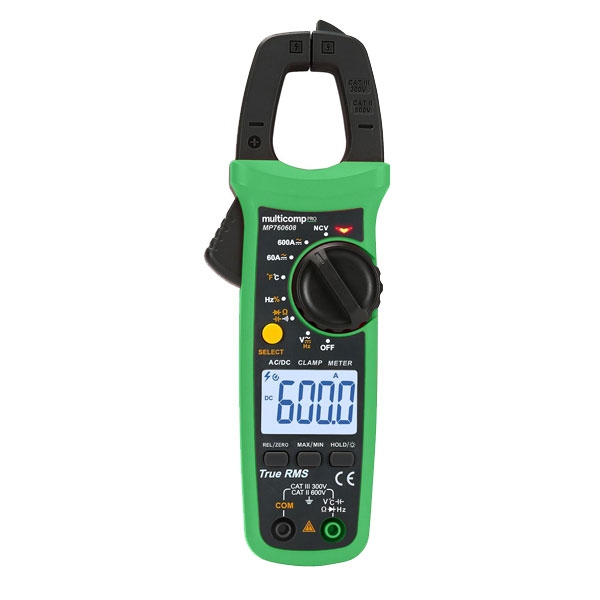
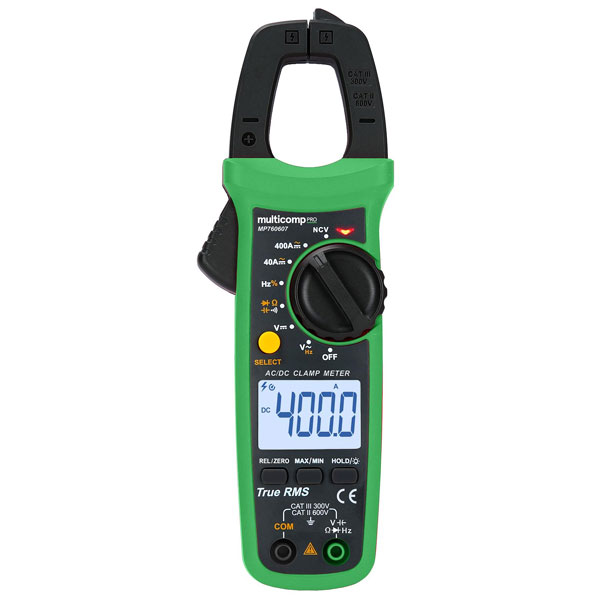
What is a multimeter?
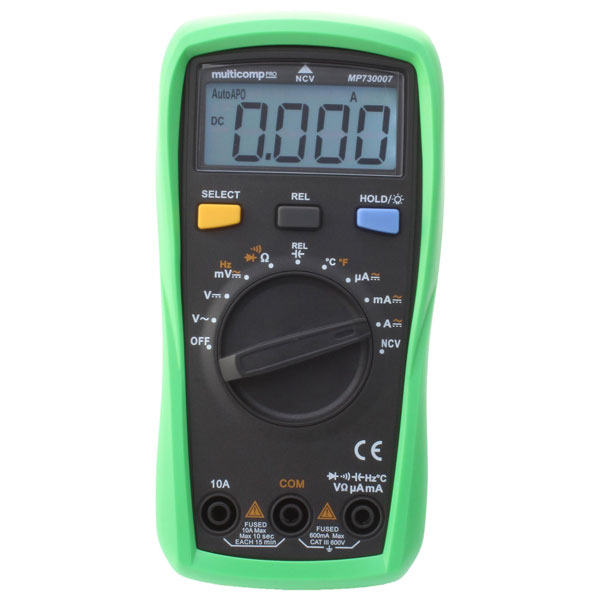
A multimeter is a device for measuring electricity. You can usually measure voltage, current, and resistance with it. Many models also offer additional functions.
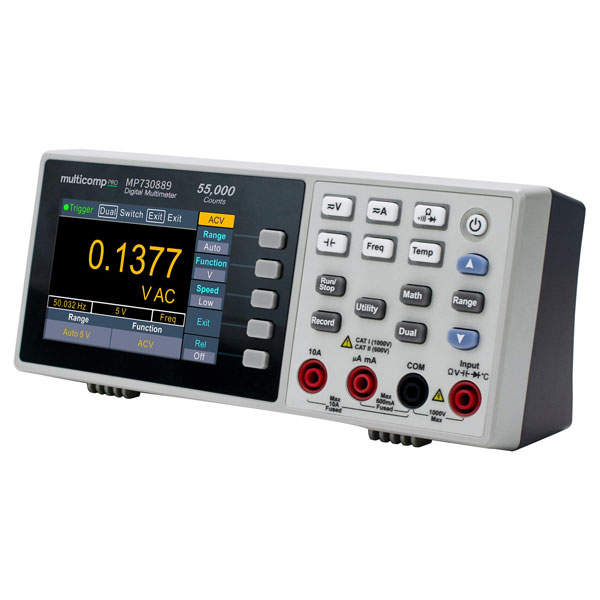
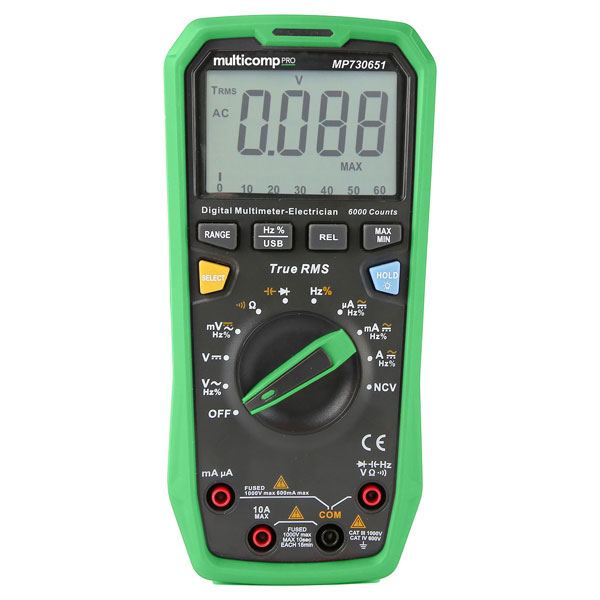
A digital multimeter displays the measurement value on a screen. This allows you to read the result quickly and clearly. The device is suitable for testing cables, components, and electronic circuits.
Multimeters are used by hobbyists, students, mechanics, and technicians. They are useful for building, testing, and repairing electronics.
What can you measure with a multimeter?
Most multimeters measure direct current and alternating current. You can also measure resistance and current. The available functions vary by model.
Many digital multimeters can also measure the following:
- Continuity
- Capacity
- Frequency
- Temperature
- Diodes
- Alternating current and direct current
A continuity test checks whether two points are connected. The multimeter often emits a beep when there is a good connection. This is useful for cables, switches, and printed circuit boards.
With the diode test, you check a diode or LED. Some models also offer an NCV function. NCV stands for Non-Contact Voltage. This allows you to detect the presence of AC voltage without making direct contact.
Always check the product information. Not every multimeter has all these functions.
Digital or analog multimeter
A digital multimeter displays the value using numbers. These models are easy to read and often offer many functions. Therefore, most users choose a digital multimeter.
An analog multimeter uses a pointer and a scale. With this, you can sometimes track changes well. However, reading the values requires more experience. The risk of a reading error can also be greater.
For most projects, a digital multimeter is the best choice. It is fast, clear, and versatile.
What is a True RMS multimeter?
True RMS is important when measuring AC voltage and AC current. A standard multimeter measures well, especially with a clean sinusoidal waveform.
Many modern devices do not produce a perfect sine wave. Think of dimmers, frequency converters, and switching power supplies. With these signals, a standard multimeter may show an incorrect value.
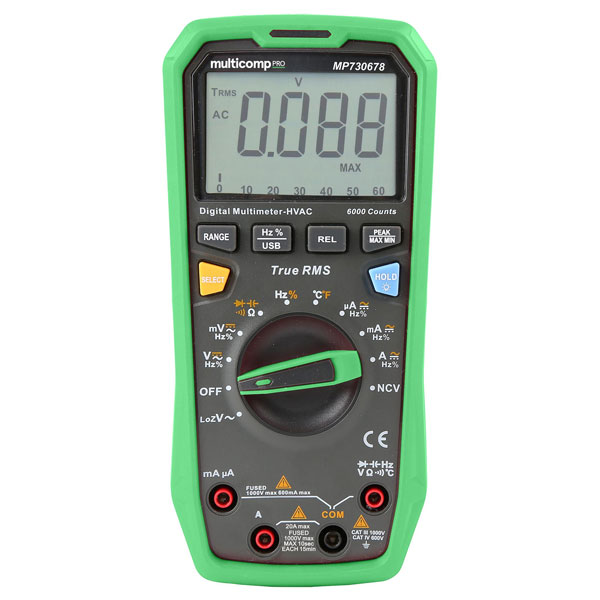
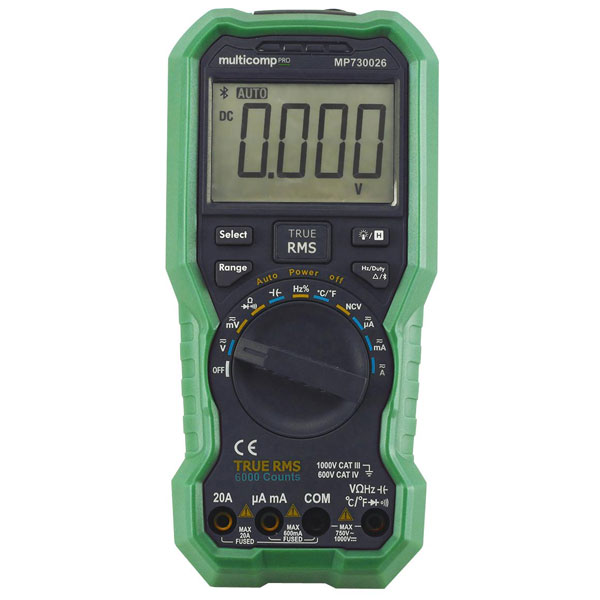
A True RMS multimeter calculates the effective value of the signal. This often gives a better result for distorted signals.
Do you mainly measure batteries and simple DC voltage? Then you usually don't need True RMS. Do you often work with AC voltage or modern electronics? Then this function is recommended.
Automatic or manual measuring range
With a manually set multimeter, you choose the measurement range yourself. You must estimate in advance how high the measured value will be.
A multimeter with automatic range does this for you. This function is also called autorange. The device selects a suitable range itself. This works quickly and reduces the risk of an incorrect setting.
Manual range can be useful if you want more control. For beginners, autorange is often easier. Some multimeters offer both options.
What does the number of counts mean?
The number of counts determines how many different values the screen can display. A multimeter with 6000 counts, for example, can display values from 0 to 5999.
More counts often provide more detail in the display. This means you do not need to switch to a different measurement range as quickly. However, this does not automatically mean that the measurement is more accurate.
Therefore, also look at the stated accuracy. Counts and accuracy are two different properties. Both are important for precise measurement work.
Hand multimeter or table multimeter
A handheld multimeter is compact and easy to carry. This type is suitable for repairs, installation work, and general use.
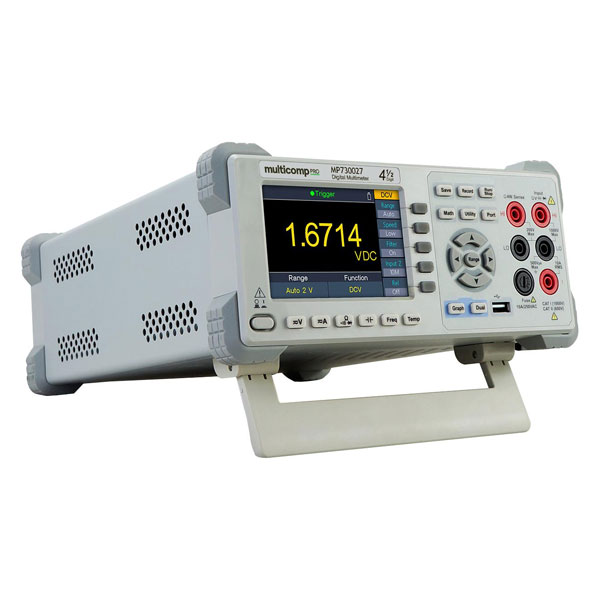
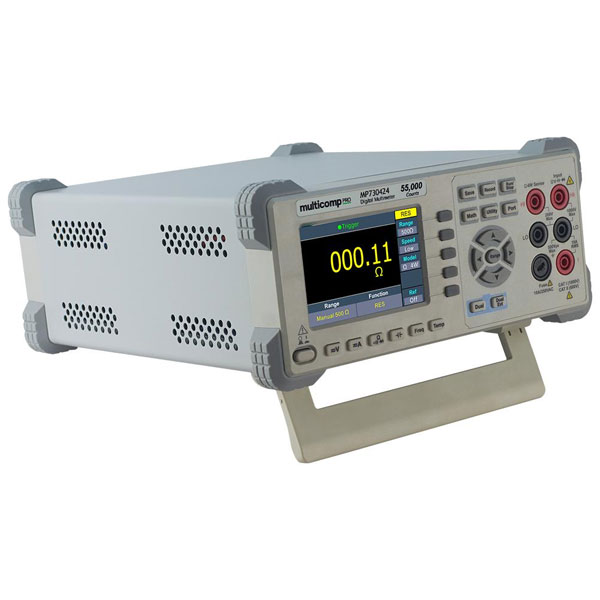
A bench multimeter is placed on a fixed workstation. It is also known as a bench multimeter. Bench models often have a larger display. They can also offer more measurement ranges and functions.
Some bench multimeters have USB, RS232, or another connection. This allows you to send measurements to a computer. This is useful for long tests and fixed test setups.
For mobile work, you usually choose a handheld multimeter. For a workshop, test lab, or production line, a bench multimeter might be more suitable.
When do you choose a clamp meter?
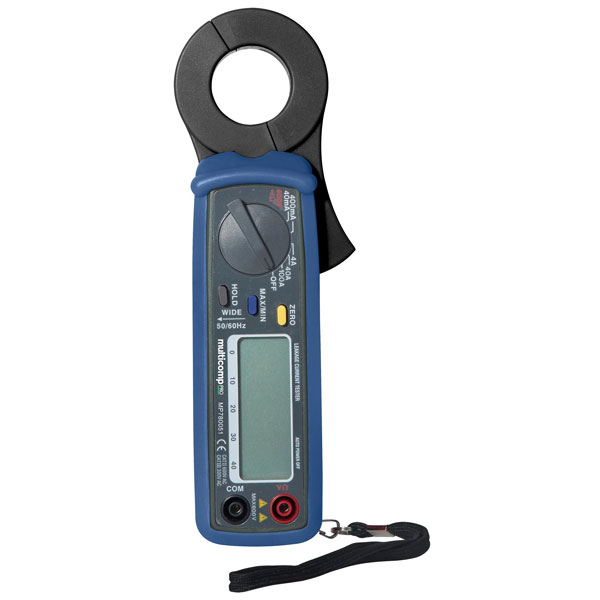
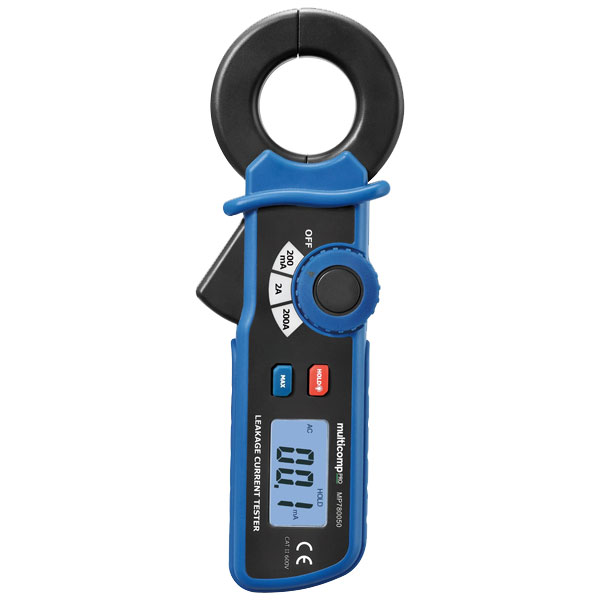
With a clamp meter, you measure current through a cable. You clamp the clamp around a single conductor. The circuit does not need to be opened.
This makes a clamp meter useful for higher currents. You can also work faster and safer. Some clamp meters only measure alternating current. Other models also measure direct current.
Pay close attention to the minimum and maximum current. A clamp meter for high currents is not always suitable for small leakage currents.
To measure very small currents, you use a leakage current clamp. This is designed to detect small deviations. This helps in searching for insulation problems and unwanted current.
Pay attention to the safety category
Multimeters often have a CAT classification. This indicates the electrical environment for which the device is designed. Examples are CAT II, CAT III, and CAT IV.
A higher number does not only mean that the device can handle more voltage. The location of the measurement also plays a role. A measurement in an electronic device places different demands than a measurement in an electrical installation.
Therefore, check both the CAT category and the maximum voltage. Also, use test leads that match the measurement. Always follow the manual.
Never work on a voltage if you do not know how to do so safely. If in doubt, a qualified professional must perform the measurement.
How do you use a multimeter?
First, select what you want to measure. Then, insert the test leads into the correct connections. Next, set the correct measurement function.
When measuring voltage, you place the test leads across two test points. For a current measurement, a standard multimeter often needs to become part of the circuit. This requires a different connection.
An incorrect connection can damage the fuse or multimeter. In the worst case, a dangerous situation arises. Therefore, always check the setting before you start.
Which multimeter suits you?
For simple electronics work, a digital multimeter with autorange is often sufficient. Choose a model that measures voltage, current, resistance, and continuity.
Do you work with AC voltage and distorted signals? Then choose a True RMS multimeter. For larger currents, a clamp meter might be more convenient.
Do you want to save measurements or perform them at a fixed workstation? Then take a look at a bench multimeter with a computer connection.
Pay attention to the measurement range, accuracy, and safety with every choice. This way, you will find a multimeter that suits your work and experience.