
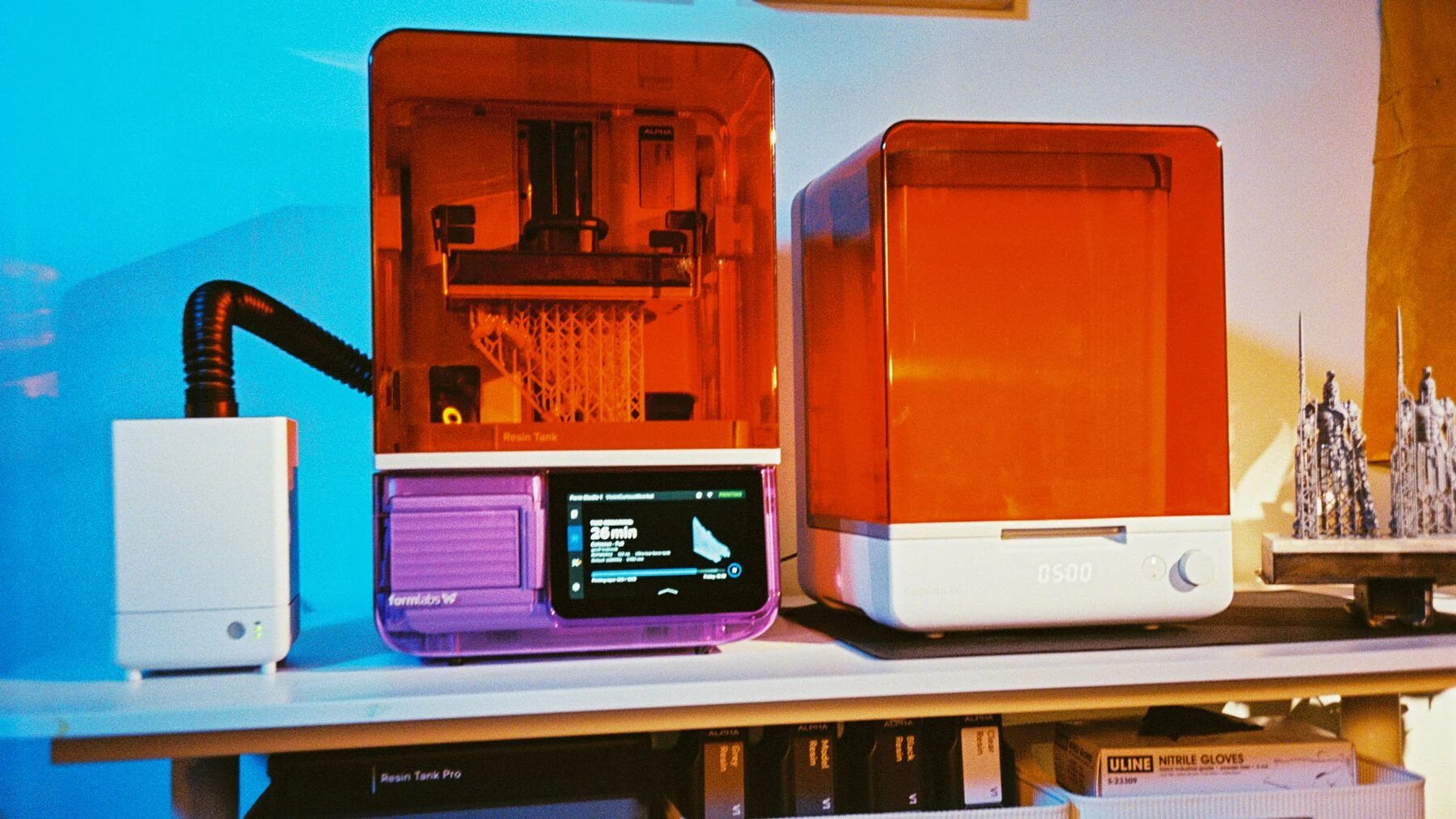
Formlabs Form Studio 1: when should you choose resin over filament?
Do you want to make miniatures with sharp details? Or are you looking for a printer for enclosures and technical parts? The Formlabs Form Studio 1 gives you a new option alongside a filament printer.
Choose resin when fine details, small shapes and a smooth surface matter most. Filament is often practical for larger parts, brackets and everyday projects. Choosing the right material determines whether your print is suitable for its intended use.
Formlabs introduced the Form Studio 1 on 14 October 2026. The Basic Graphite Founders Edition is available to pre-order from Electronics For You. Delivery is expected in November or December 2026.
What is the Formlabs Form Studio 1?
The Formlabs Form Studio 1 is a resin 3D printer. It uses light to cure liquid plastic layer by layer. The technology is called MSLA and belongs to the SLA family of printers.
The build volume is 200 × 125 × 235 mm. The printer has 35-micrometre pixels, or 0.035 mm. This helps with fine details. However, the pixel size does not guarantee that every dimension will be accurate to 0.035 mm.
You prepare models in PreForm. This is where you choose the material, orientation and supports. The supports hold parts of the model in place during printing. The automatic resin supply replenishes material during the print.
Comparing resin and filament
A filament printer melts a plastic strand, such as PLA or PETG. The print head lays it down in lines. This is called FDM or FFF.
A resin printer uses light to cure liquid resin. This generally produces finer details and a smoother surface. Afterwards, you need to wash the print and post-cure it according to the material instructions.
| What should you consider? | Resin, such as the Form Studio 1 | Filament, such as a Bambu Lab printer |
|---|---|---|
| Small details | Useful for fine shapes and small text | Detail depends heavily on the nozzle and settings |
| Surface | Usually smoother, with less visible layer lines | Layer lines are often more visible |
| Material choice | Resins with specific properties | Options include PLA, PETG, ASA and TPU |
| Finishing | Washing, drying and post-curing where required | Often removing supports and finishing edges |
| Multiple colours | Usually painted afterwards | Automatic switching is possible with a compatible material system |
| Workspace | Space needed for resin and post-processing | Match the workspace and ventilation to the filament |
The technology only tells part of the story. Also consider strength, heat, dimensions and the space available.
Three projects that call for different choices
Miniatures and scale models
Think of a face, a roof tile or tiny lettering on a model. Resin is often a good option for details like these. A smooth surface can also save time before painting.
Alpha Model Resin is one of the materials available for the Form Studio 1. Formlabs positions this material for figures and models with fine details. You still need to allow for support marks and the fragility of thin parts.
Are you making a large scenery piece instead? Filament may be more practical. You can print the model in sections, then glue and finish them. Choose based on the details that need to remain visible at a normal viewing distance.

An enclosure for Raspberry Pi or Arduino
For a simple project enclosure, a filament printer is often a sensible starting point. You can quickly test the fit, adjust the design and print it again. PLA or PETG may be suitable, depending on heat and load.
Resin becomes more interesting when appearance matters. For example, for a demonstration model with small text or clean shapes. Alpha Grey Resin is intended for applications such as concept models and fit tests.
With either technology, pay attention to ventilation openings, screw mounts and clearance around connectors. Test the enclosure with the electronics inside. A neat exterior tells you little about the temperature during use.
A functional prototype
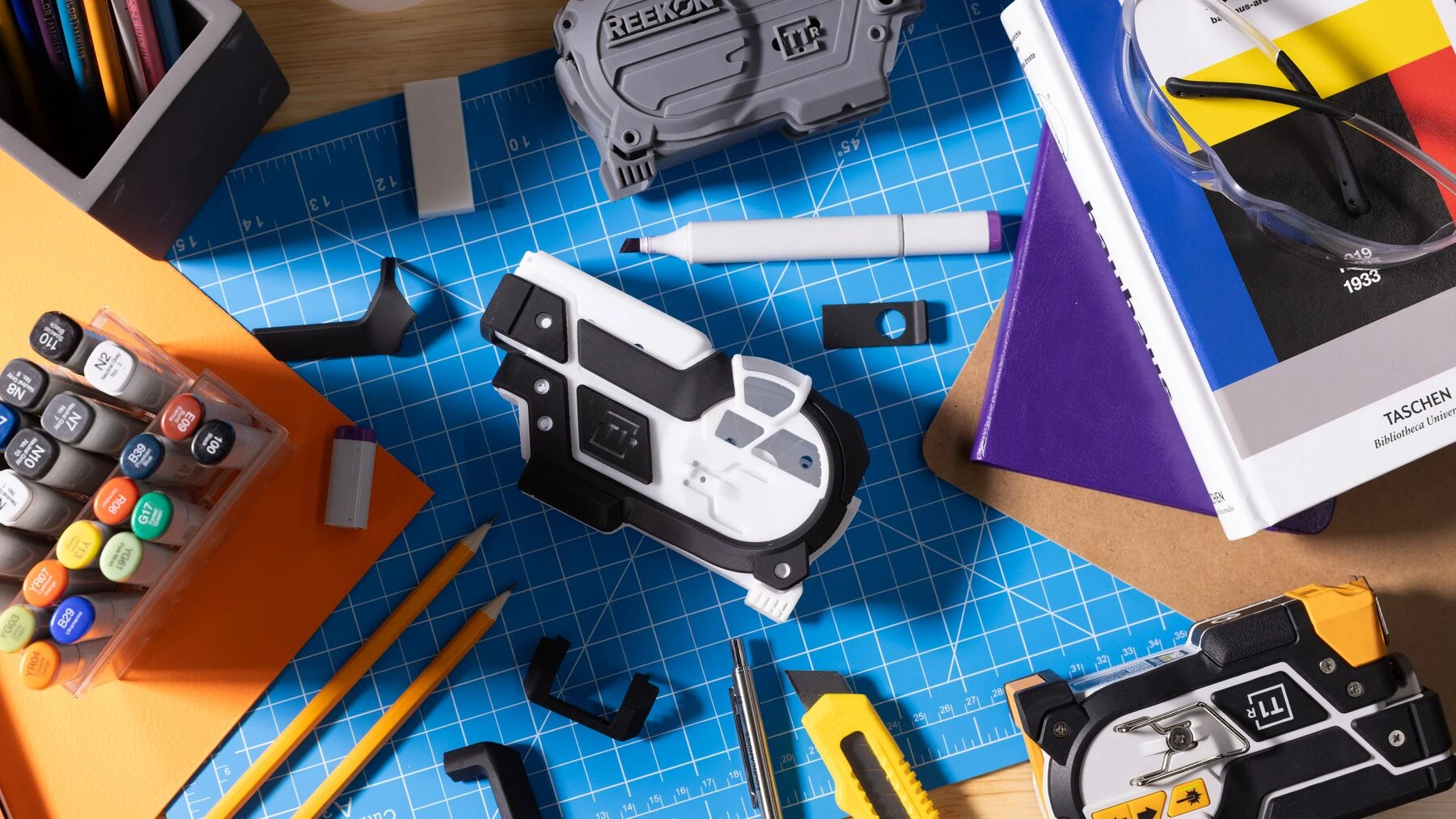
Does the part only need to show what a product looks like? Or does it need to bend, grip or transmit force? That difference determines the properties you need.
You may choose a different material for a shape model than for a snap-fit connection. A load-bearing part also requires you to check the material data. Look at toughness, temperature and the direction of the load.
A resin print is not automatically brittle. A filament print is not automatically stronger either. Compare the specific material and test the part under its intended operating conditions.
How does printing with the Form Studio 1 work?
With resin, finishing is part of the printing process. Allow for these steps:
1. Prepare your file. Choose the resin, orientation and supports in PreForm.
2. Start the print. Check that the correct tank and material are installed.
3. Wash the part. Remove any remaining liquid resin with the recommended cleaning agent.
4. Let the print dry. Then follow the post-curing instructions.
5. Remove supports and finish the part. The correct order depends on the material and model.
The Form Studio Wash+Cure combines washing and post-curing in one device. You carry out the two steps one after the other. This saves space, but it does not mean a part is ready to use straight from the printer.

What does the Form Studio 1 cost, including post-processing?
The Basic Graphite Founders Edition costs €772.95 including VAT in the Dutch price example below. For a new resin workspace, you also need to budget for material and finishing equipment.
This example uses the Dutch prices at Elektronica Voor Jou on 21 October 2026:
| Product | Price including VAT |
|---|---|
| Form Studio 1 Basic Graphite Founders Edition | €772.95 |
| Form Studio Wash+Cure | €228.69 |
| Alpha Grey Resin, 1 litre | €43.56 |
| Subtotal | €1,045.20 |
This is a subtotal for these three products. Cleaning agent, protective equipment and any additional accessories cost extra. These could include a VOC Extractor or extra tanks. Always check the current package contents and product prices.
For comparison, the Bambu Lab P2S is listed at €559.95 on the same date in this Dutch price example. Adding a €19.99 spool of Bambu Lab PETG Basic brings the total to €579.94. This is a different setup, without an AMS for automatically switching colours or materials.
You can only work out the cheapest print using a specific model. Include supports, material waste, maintenance and your own time. A litre of resin and a kilogram of filament are not equivalent amounts of material.
What does resin printing require from your workspace?
Set aside a dedicated space for the printer and washing. Protect your work surface from drips. Wear suitable gloves and eye protection when handling liquid resin.
UL GREENGUARD Gold certification applies to the combination of the Form Studio 1, Alpha Resins and the VOC Extractor. This certification concerns low chemical emissions. You still need to follow the safety information for the resin and cleaning agent.
Do not pour liquid resin or contaminated cleaning agent down the drain. Follow the material instructions and your waste collector's rules for disposal.
When should you also consider the Form 4?
The Form Studio 1 is an option for models and prototypes within its supported material range. The Form 4 offers a wider selection of validated engineering resins. These materials have tested print settings tailored to them.
Do you have a specific material requirement? First check which printer supports the resin you need. For example, Alpha Resins for the Form Studio 1 are not suitable for the Form 4.
Compare the Formlabs 3D printers based on your application. Purchase price or pixel size alone does not give you enough information.
Frequently asked questions about resin and filament
Is the Form Studio 1 suitable for beginners?
Yes, if you are also willing to learn how to handle resin. PreForm and the automatic resin supply help with printing. Washing, finishing and careful handling remain part of the process.
Can resin replace my filament printer?
That depends on your projects. Resin can add a lot when making detailed models. Do you also print large brackets or parts in multiple colours? Then the two printers can complement each other.
Does every resin print need post-curing?
Follow the instructions for your chosen resin. The required treatment varies by material. For Alpha Grey, Formlabs specifies washing, complete drying and post-curing.
Can you use other resins with the Form Studio 1?
Open Material Mode is included. Resins from other brands require a Resin Tank Pro. You need to determine suitable settings yourself and check material compatibility.
Which 3D printer suits your project?
Choose the Form Studio 1 when fine details and surface finish are your main priorities. Consider a filament printer for varied projects and larger parts. For technical applications, start with the material you need.
Electronics For You is an official reseller of Formlabs and Bambu Lab. Ask us for advice and tell us what you want to make. Include the dimensions, quantities and requirements for the part.
Do you only need a part occasionally? Our 3D printing service can also print a suitable design in filament. That way, you do not need to buy your own printer for a one-off job.