Laboratory power supplies
A laboratory power supply provides power to electronic circuits. You set the voltage and maximum current yourself. This allows you to safely build, test, and repair electronics.
A lab power supply is useful for many projects. Think of Arduino, sensors, LED lighting, and small motors. An adjustable power supply also comes in handy when testing printed circuit boards.
Pay attention to the voltage and current when making your choice. For many projects, a 0–30 V, 0–5 A lab power supply is suitable. Do you need more voltage? Then choose a 0–60 V model.
Do you want to power multiple circuits simultaneously? Then take a look at a multi-channel laboratory power supply. For fixed test programs, a programmable model is a good choice.
Compare our lab power supplies by range, power output, and number of channels. This way, you can quickly find a model that suits your project or workshop.
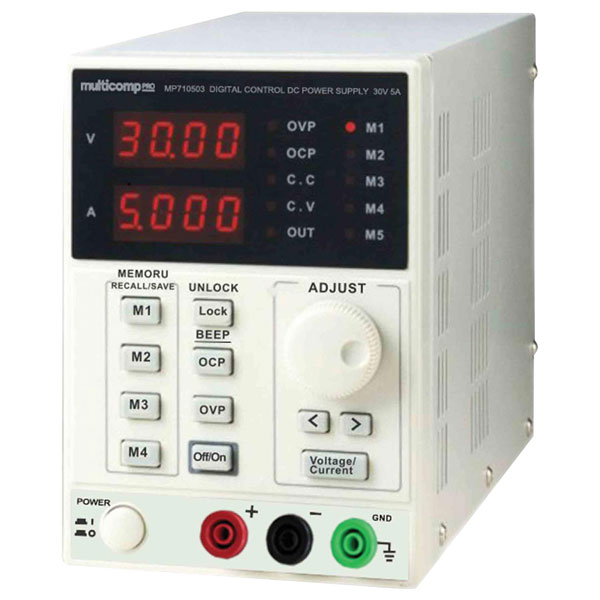
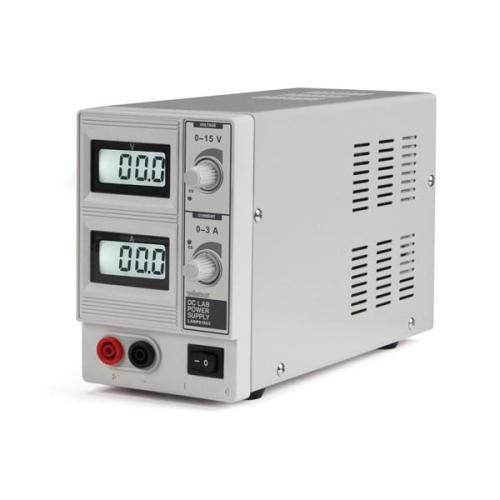
What is a laboratory power supply?
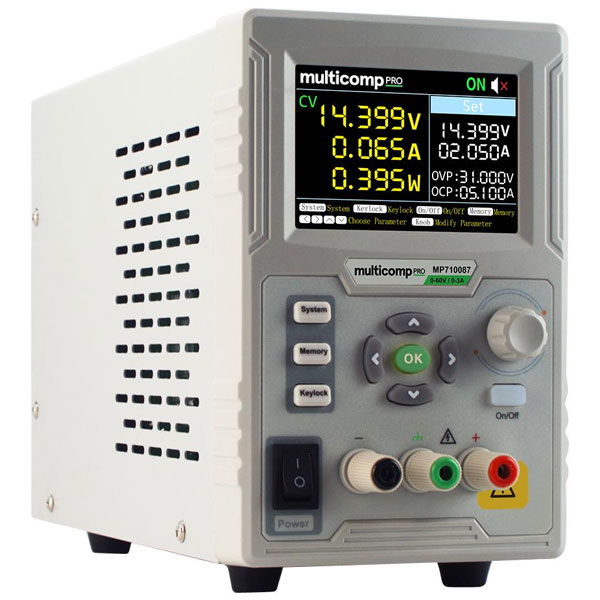
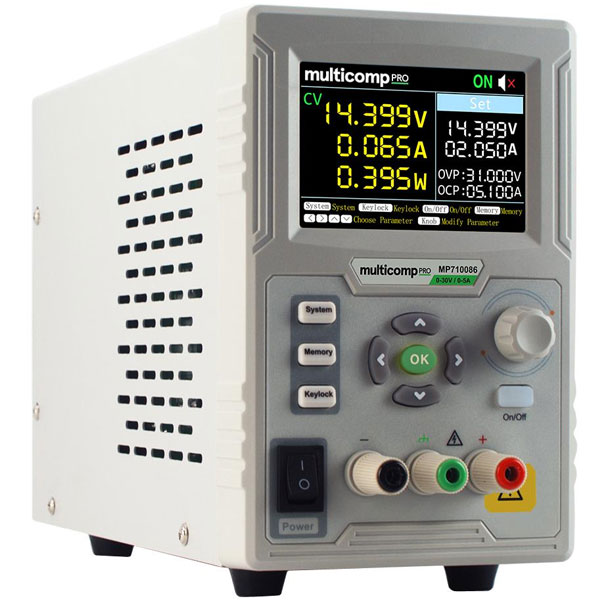
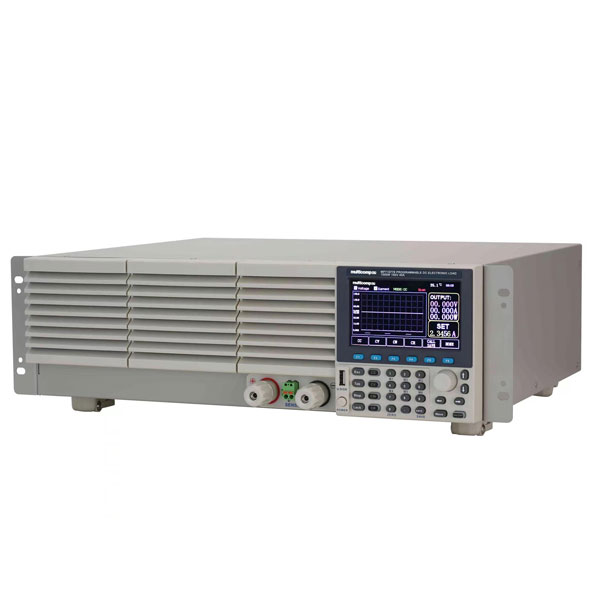
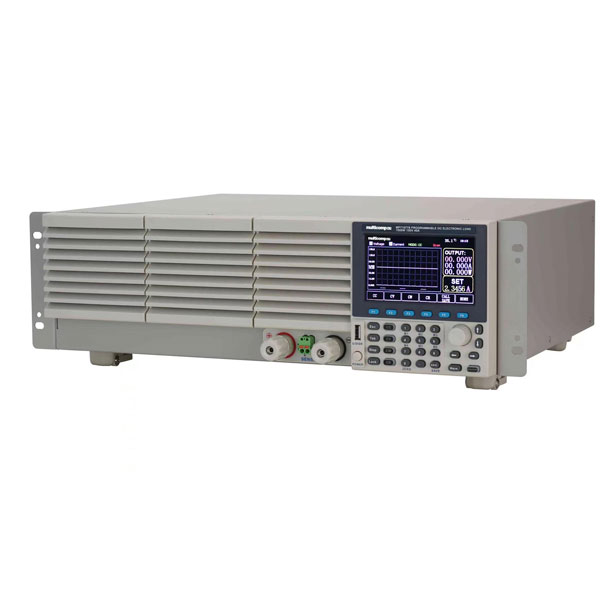
A laboratory power supply is an adjustable power supply for testing electronics. The device converts mains voltage into a stable DC voltage. You can set the output voltage and maximum current yourself.
A lab power supply is also known as a laboratory power supply, DC power supply, or adjustable power supply. The device is suitable for use on a workbench, in a workshop, or in a practical laboratory.
With a lab power supply, you can safely power a circuit. You do not need to constantly use a different adapter or battery for this. You can also test how a circuit responds to different voltages.
What do you use a laboratory power supply for?
Lab power supplies are used by hobbyists, students, repairers, and professional developers. They are suitable for many types of electronics.
You can use a lab power supply for, among other things:
- Powering electronic circuits
- Testing Arduino projects
- Developing prototypes
- Checking printed circuit boards
- Testing engines and LED lighting
- Detecting a short circuit
- Repairing electronic devices
- Conducting lessons and practicals
- Testing components at different voltages
A laboratory power supply often also displays the current voltage and current. This allows you to see immediately how much current a circuit is using. Unexpectedly high current consumption can indicate a fault or short circuit.
What voltage do you need?
The maximum output voltage is an important feature of a laboratory power supply. Many models can deliver a voltage between 0 and 30 V. This range is suitable for many general electronics projects.
Do you work primarily with microcontrollers, sensors, and small circuits? Then you often use 3.3 V, 5 V, or 12 V. An adjustable power supply of 0–30 V offers sufficient headroom for this.
For higher voltage applications, a 0–60 V lab power supply may be required. Check in advance what voltage your project requires. Preferably choose a power supply with a slightly wider range than you think you will immediately need.
A wider voltage range is not always better. A model with a lower range can sometimes be adjusted more accurately within that range. Therefore, also consider the resolution and accuracy of the power supply.
How much current must a laboratory power supply?
The maximum current is indicated in amperes. Many lab power supplies can deliver 3 A or 5 A. This is enough for many printed circuit boards, sensors, and microcontroller projects.
Motors, powerful LED strips, and other larger consumers may require more power. Therefore, check the expected power consumption of your application.
Choose a power supply that can deliver more current than your circuit normally uses. The circuit only draws the current it requires. Therefore, a 5 A power supply does not automatically send 5 A through your project.
Always set a safe current limit. Start with a low limit for new circuits. Increase it only if necessary. This limits the risk of damage in the event of a fault.
Also pay attention to the maximum power
The power of a laboratory power supply is indicated in watts. You calculate the power by multiplying the voltage by the current.
For example, a 30 V, 5 A power supply has a maximum power of 150 W. With some models, you cannot use the maximum current at every voltage. In that case, the total power forms the limit.
Therefore, do not just check the maximum voltage and current. Also look at the maximum output power. This is especially important under heavy load or during prolonged tests.
What are a CV and CC?
Many lab power supplies have CV and CC modes. CV stands for constant voltage. In this mode, the power supply keeps the set voltage constant.
CC stands for constant current. This mode becomes active as soon as the set current limit is reached. The power supply then lowers the voltage to keep the current at the set value.
This current limiting is one of the most important functions of a laboratory power supply. It helps protect components during testing. The CC mode also makes it possible to test applications with a fixed current.
You can often see which mode is active on the display. Is the power supply unexpectedly in CC mode? Then the circuit may be drawing too much current. There may also be an incorrect connection or a short circuit.
Select one or more channels
A simple laboratory power supply usually has one adjustable output. This is sufficient if you only need one voltage.
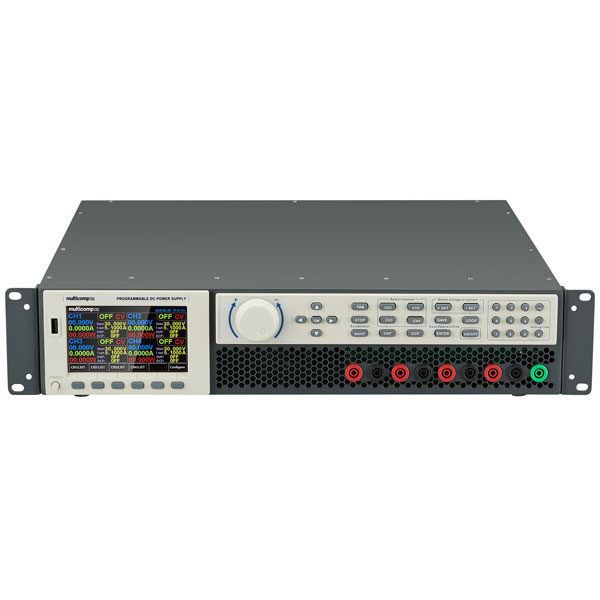
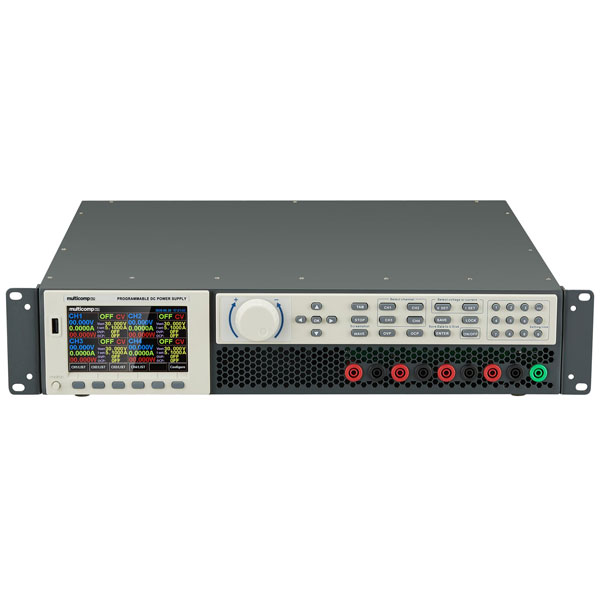
For more complex circuits, multiple channels can be useful. For example, a circuit might require 3.3 V, 5 V, and 12 V simultaneously. With a power supply with multiple outputs, you make these voltages available within a single test setup.
Some outputs can be used in series or parallel. This increases the available voltage or current. This is only permitted if the power supply supports this function. Always check the manual for this.
Adjustable or programmable laboratory power supply
A standard laboratory power supply is set using rotary knobs or buttons. This works quickly and is suitable for daily use.
A programmable laboratory power supply offers more possibilities. You can save settings or have them change automatically. Some models can be connected to a computer via USB, LAN, or RS232.
This is useful for long tests and fixed test procedures. For example, you can set multiple voltages in succession. You can also perform a test in the same way every time.
For hobby use, a manually adjustable power supply is often sufficient. For development, production, and automated testing, a programmable model can save a lot of time.
What else should you pay attention to?
When comparing laboratory power supplies, also pay attention to the readability of the screen. A clear display makes setting and checking easier.
Additionally, look at the setting resolution, accuracy, ripple, and available protections. Consider protection against overload, overvoltage, and overheating.
The connections are also important. Check if they match your test leads and application. Only switch on the output after you have checked the voltage, current limit, and connections.
Which lab power supply suits you?
For general electronics projects, an adjustable lab power supply of 0–30 V and 0–3 A or 0–5 A is often a good choice. This range suits many circuits and repairs.
Do you need a higher voltage? Then choose a 0–60 V model, for example. Do you work with multiple supply voltages? Then a power supply with two or four channels might be more convenient.
For automated tests, choose a programmable laboratory power supply. Also pay attention to the available connections and software capabilities.
First, determine the voltage, current, and power you need. Then, look at the number of channels and the desired controls. This way, you will find a lab power supply that suits your projects and workspace.