
Bambu Lab A2L: Everything you need to know about the new large Bambu Lab 3D printer
What is the Bambu Lab A2L?
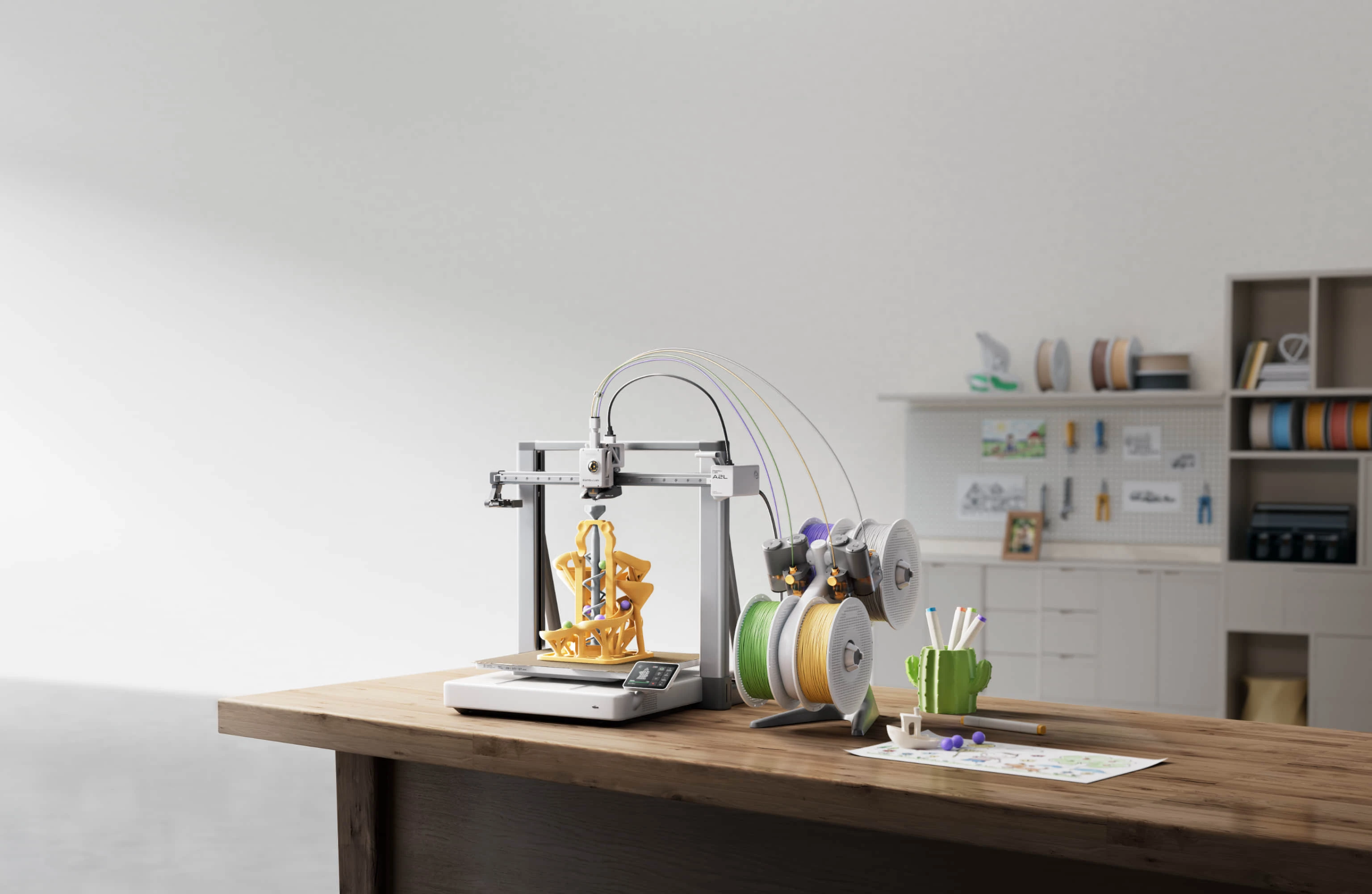
The Bambu Lab A2L is a new large 3D printer from Bambu Lab. The printer is aimed at users who want to print larger models without splitting parts.
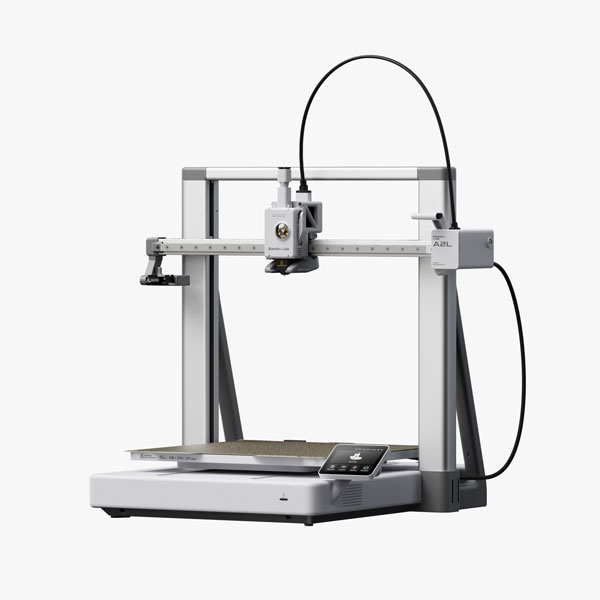
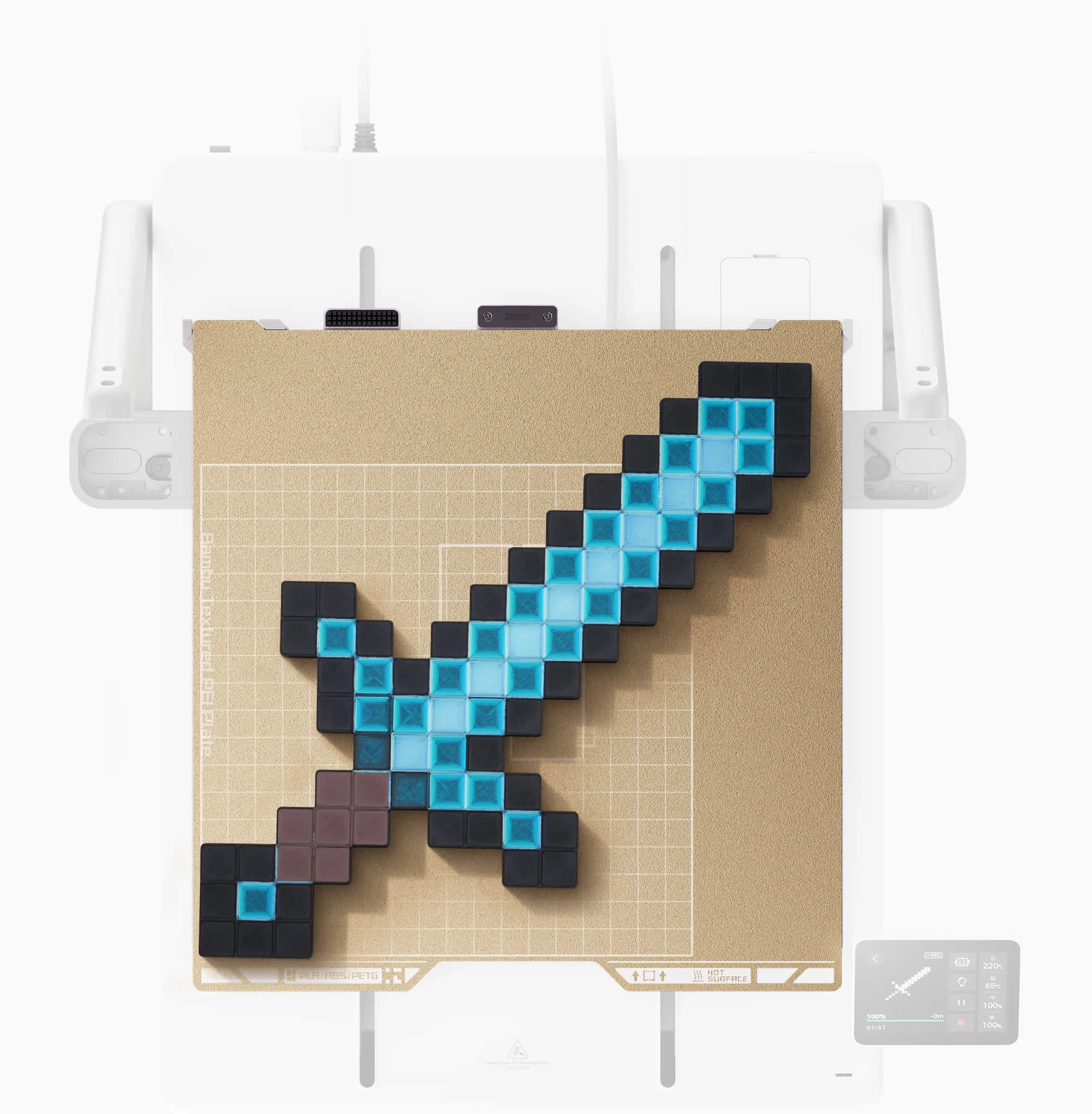
With a build volume of 330 × 320 × 325 mm, the A2L offers much more space than standard 256 mm printers. According to the media kit, the print volume is actually over 105% larger. As a result, users can print larger projects in a single pass.
Within the Bambu Lab range, the A2L fills the gap between the A1 and the X2D. The A1 remains primarily aimed at beginners and hobbyists, while the X2D focuses on professional applications. The A2L combines a larger size with ease of use, making the printer a logical intermediate step for users who have outgrown their first printer.
The A2L will also have its own role alongside the new P2S. The P2S is primarily about speed and performance. The A2L, on the other hand, focuses on large-format printing and creative applications.
That larger print bed solves a well-known problem. Many users currently still have to break large models down into separate parts. This is followed by extra gluing and assembly. With the A2L, that often becomes unnecessary. Cosplay helmets, organizers, RC parts, and prototypes fit much better on the larger print surface.
In addition, Bambu Lab places a strong emphasis on smart automation. The printer uses technologies such as Adaptive Vibration Compensation, as well as Granular Dampers and a PMSM Servo Extruder. These systems reduce vibrations and help prevent ghosting and extrusion issues. As a result, the printer should maintain good print quality even at higher speeds.
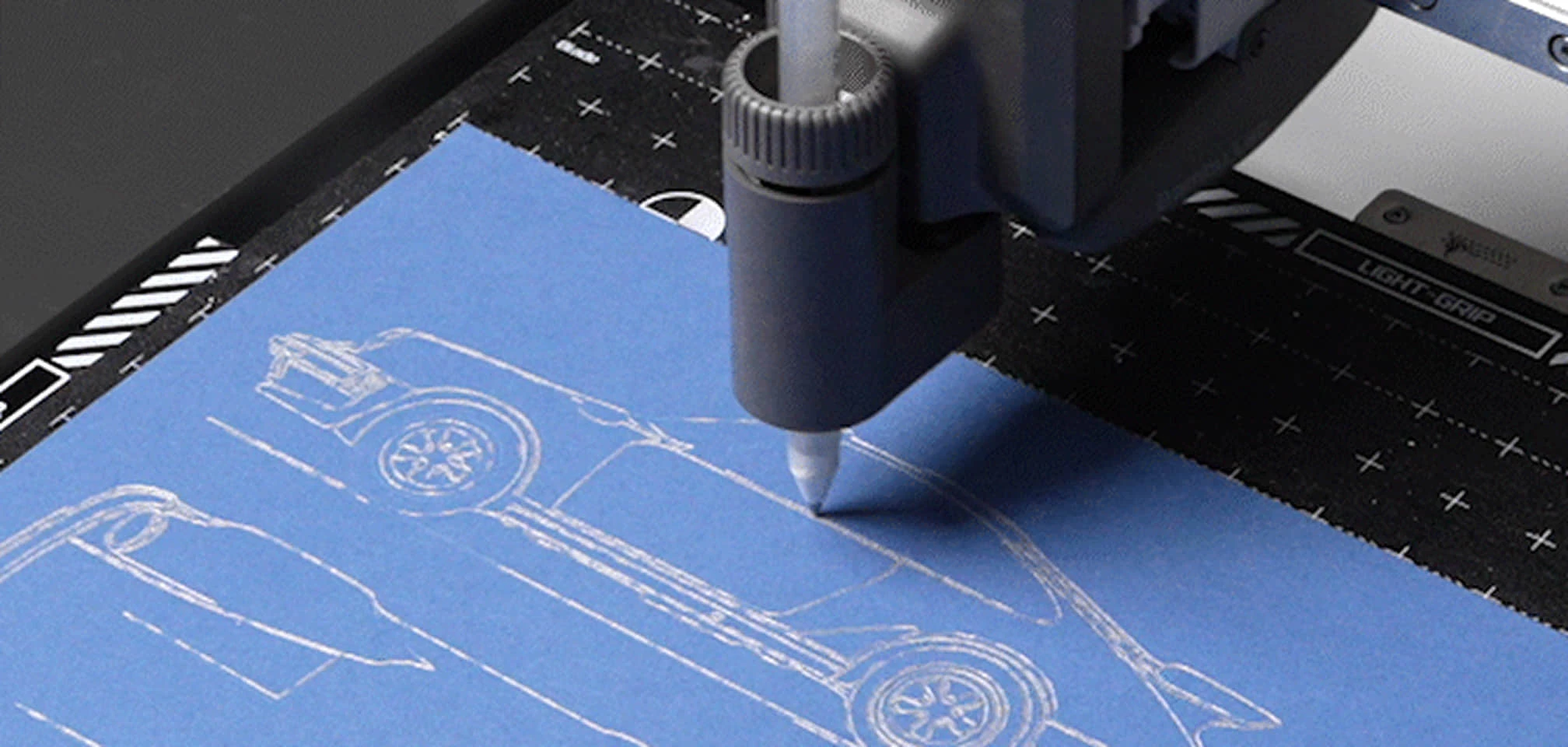
The A2L also supports additional creative modules. With the Blade Cutting Module, you cut materials such as paper, vinyl, and leather. The Pen Module enables drawing and plotting. As a result, the A2L functions not only as a 3D printer but also as a creative maker machine.
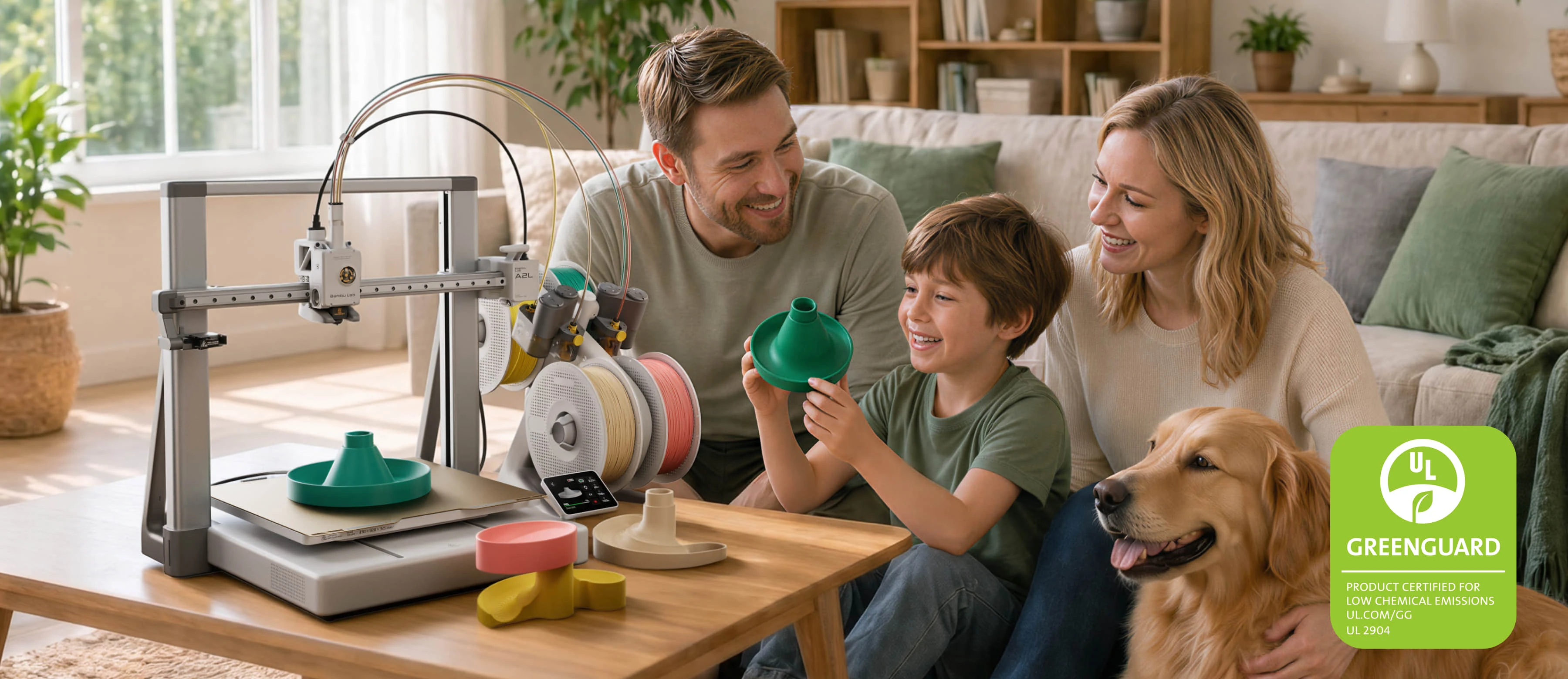
The target audience for the A2L is broad. Beginners get a simple way to print large. Makerspaces and schools get a versatile machine for creative projects. Cosplayers benefit from the larger build volume, while engineers can create large prototypes faster.
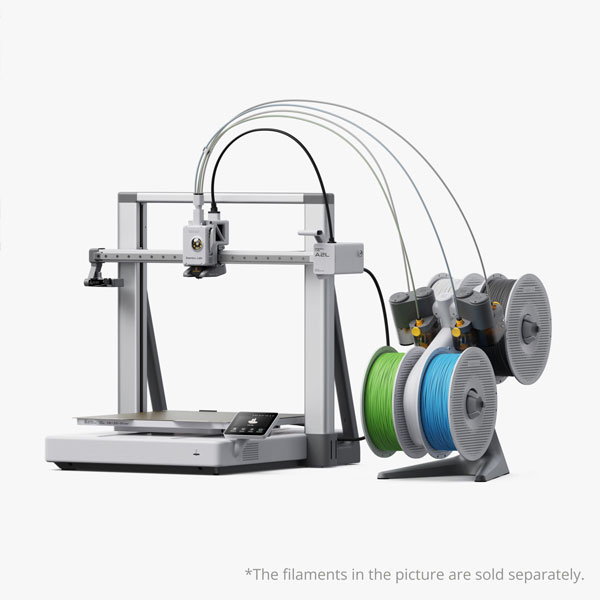
The A2L therefore appears to be more than just a larger version of the A1. Rather, the printer forms a new platform within the Bambu Lab ecosystem. According to the media kit, the printer also supports multiple AMS systems simultaneously. This enables multicolor printing on a larger scale.
Bambu Lab A2L specifications
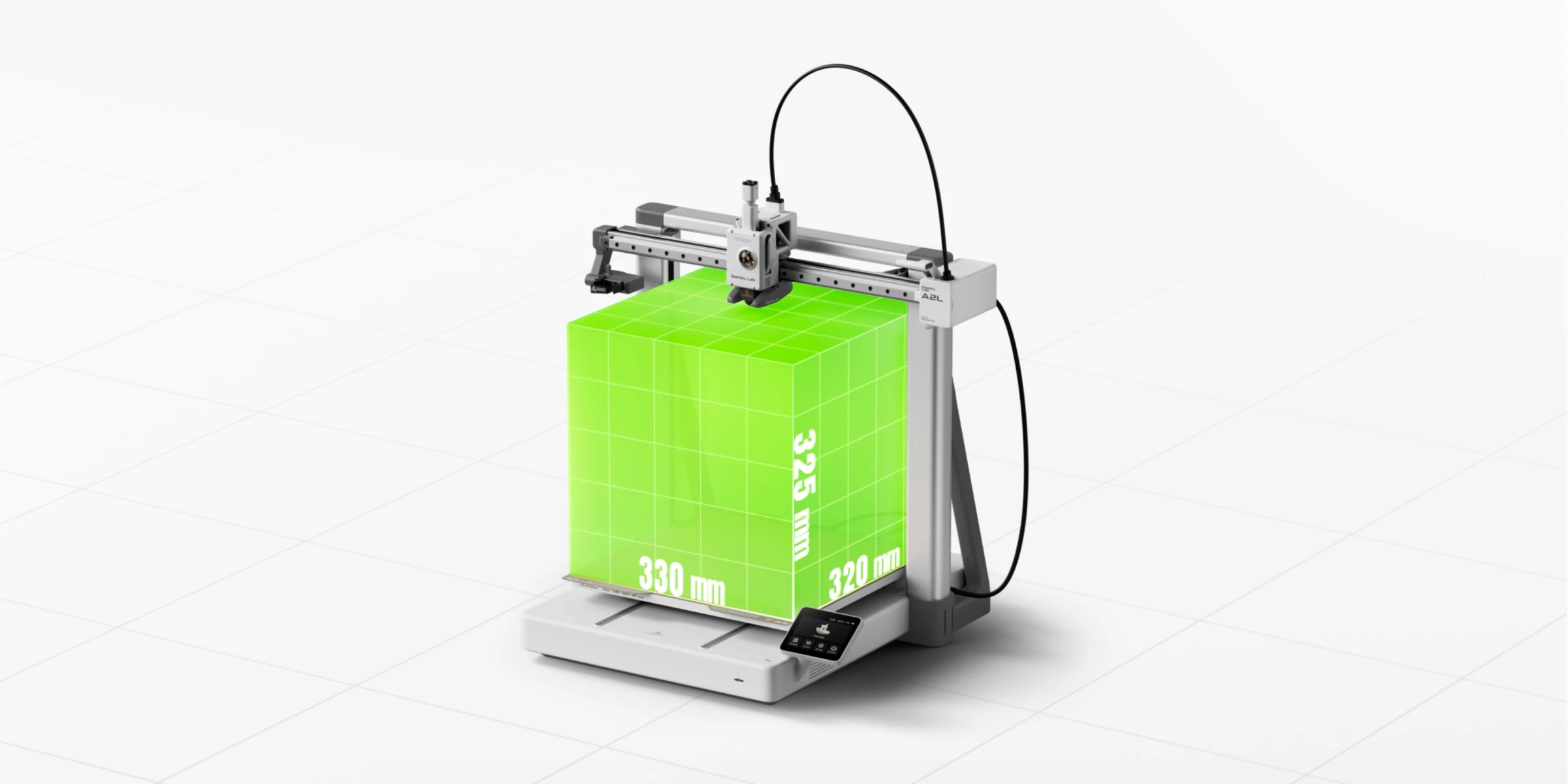
The Bambu Lab A2L has some striking specifications. These immediately show what this printer is intended for. Think of large prints, high speeds, and creative projects.
The larger build volume immediately catches the eye. The new servo extruder also stands out. Additionally, the printer supports modular expansions. As a result, the A2L occupies an interesting position within Bambu Lab's product range.
Below are the full technical specifications of the Bambu Lab A2L. This information comes from the official media kit.
| Element | Specification |
| Printing technology | Fused Deposition Modeling (FDM) |
| Building volume | 330 × 320 × 325 mm |
| Chassis | Aluminum and steel |
| Outer frame | Plastic |
| Printer dimensions | 544 × 529 × 505 mm |
| Weight | 12.8 kg |
| Extruder gear | Hardened steel |
| Nozzle material | Stainless steel |
| Max nozzle temperature | 300°C |
| Supported nozzle diameters | 0.2mm, 0.4mm, 0.6mm, 0.8mm |
| Filament cutter | Built-in |
| Filament diameter | 1.75 mm |
| Extruder motor | PMSM Servo Extruder Motor |
| Build plate material | Flexible steel plate |
| Included build plate | Textured PEI Plate |
| Supported build plates | Textured PEI Plate, Engineering Plate, Cool Plate SuperTack |
| Max bed temperature | 80°C |
| Maximum print speed | 500 mm/s |
| Max acceleration | 10 m/s² |
| Max flow rate hotend | 28 mm³/s |
| Part cooling fan | Closed Loop Control |
| Hotend cooling fan | Closed Loop Control |
| Supported filaments | PLA, PETG, TPU, PVA |
| Filaments with hardened nozzle recommended | PLA-CF, PETG-CF |
| Camera | 1080P timelapse camera |
| Filament run-out sensor | Yes |
| Filament tangle sensor | Yes |
| Filament odometry | Yes |
| Power loss recovery | Yes |
| Nozzle clumping detection | Yes |
| Power supply | 100–240V AC, 50/60Hz |
| Maximum power consumption | 1000W |
| Recommended ambient temperature | 15–30°C |
| Touchscreen | 5.5 inch 240×320 touchscreen |
| Storage | MicroSD card |
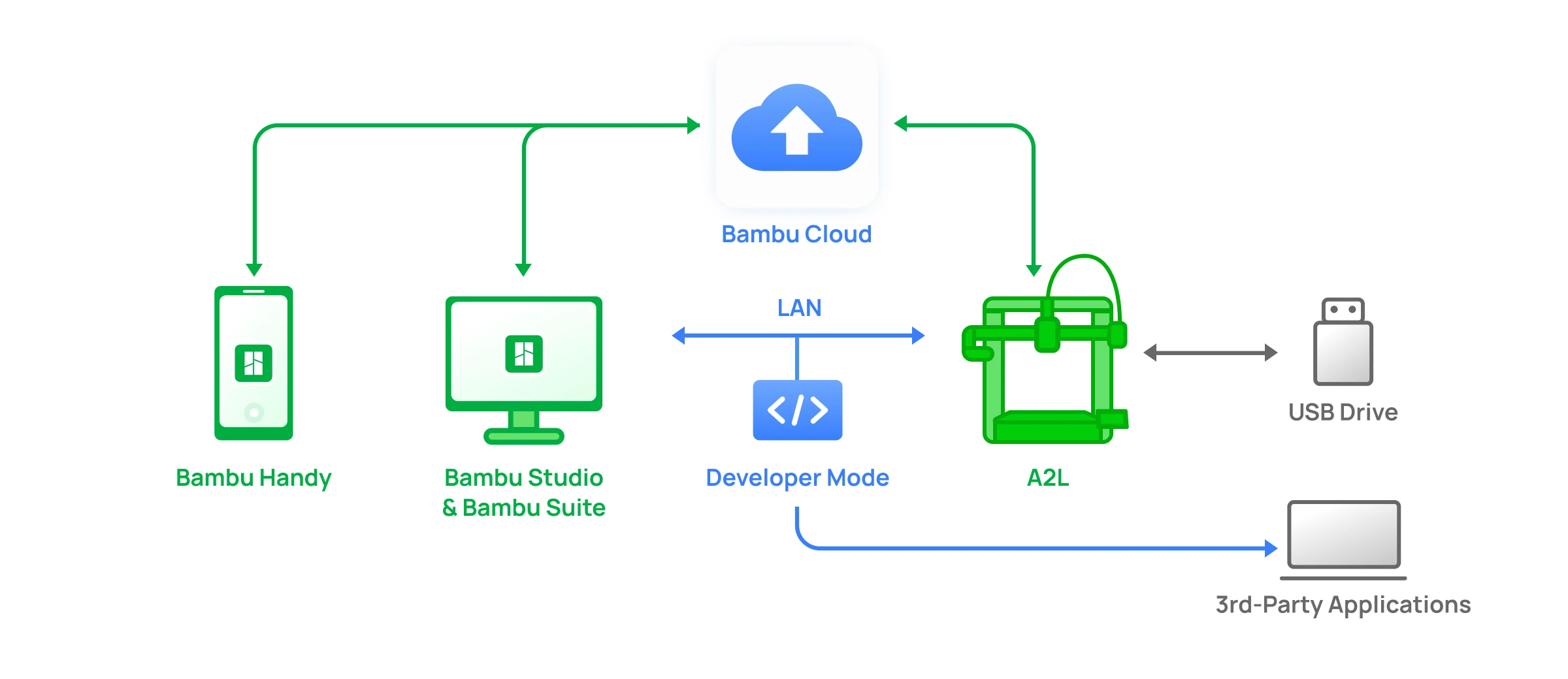
| Control | Touchscreen, mobile app and PC software |
| Processor | Cortex-M4 + Cortex-M7 |
| Connectivity | Wi-Fi, Bambu Bus |
| Slicer software | Bambu Studio |
| Supported operating systems | Windows, macOS, Linux |
| Wireless network | 2.4 GHz Wi-Fi |
| Blade Cutting Surface | 500 × 500 mm |
| Pen Drawing surface | 500 × 255 mm |
| Supported pin diameters | 10.5 mm – 12.5 mm |
| Supported cutting materials | Paper, PVC, vinyl, leather and more |
| Blade type | 45° and 60° |
| Maximum cutting thickness | 0.5 mm |
| AMS support | Up to 4 AMS units + 1 AMS Lite |
| Max number of colors | Up to 19 colors/materials |
The specifications of the Bambu Lab A2L stand out immediately. After all, this printer does not focus solely on classic 3D printing.
Thanks to support for the Blade Cutting Module and Pen Module, the A2L also functions as a creative maker machine. You can use it to cut, draw, and prototype.
The printer combines a large build volume and high print speeds. This makes the printer suitable for larger projects. New vibration compensation technologies ensure greater stability and consistent results.
The PMSM Servo Extruder and Adaptive Vibration Compensation, in particular, distinguish the A2L from many other open-frame printers in this price range.
Bambu Lab A2L building volume explained
The build volume of a 3D printer determines what you can really make. Many popular printers get stuck around 256 mm. The Bambu Lab A2L takes a different approach. This printer offers a build volume of 330 × 320 × 325 mm. That difference seems small. In practice, it changes a lot.
Many makers run into limitations. Large models often do not fit on the print bed. As a result, parts must be divided into sections. This is followed by gluing, sanding, and finishing. That takes extra time. Visible seams or weak connections also frequently occur.
The Bambu Lab A2L solves a large part of that problem. According to Bambu Lab, the printer delivers more than double the print capacity of standard 256 mm printers. As a result, many designs fit directly on the print bed.
How big is the Bambu Lab A2L?
The building volume of the A2L amounts to:
- 330 mm wide
- 320 mm deep
- 325 mm high
This makes the printer one of the largest open-frame bed-crank printers from Bambu Lab. The extra height, in particular, makes a big difference for large models. Think of helmets, organizers, or mechanical parts.
Many users only look at the numbers. You only notice the real benefit during the design phase. Large models need to be split up less often. As a result, files remain simpler. The printing process is also faster.
A larger print bed offers another advantage. You can print multiple small models at the same time. This helps with small production runs. Schools, makerspaces, and Etsy sellers also benefit from this.
Comparison with the Bambu Lab A1
Many users compare the A2L to the popular Bambu Lab A1. That makes sense. The A1 is known for speed and ease of use. However, many users later run into the limited build volume.
Here you can see the difference:
Printer Build Volume Bambu Lab A1 256 × 256 × 256 mm Bambu Lab A2L 330 × 320 × 325 mm
On paper, the difference seems small. However, the total print volume is growing enormously. As a result, new applications are emerging that are less practical on smaller printers.
Bambu Lab also appears to have developed the A2L specifically for large prints. The printer uses techniques that reduce vibrations. This is important for large models. Large bed-crank printers are more prone to ghosting or ringing.
According to the media kit, the A2L uses, among other things:
- Adaptive Vibration Compensation
- Granular Dampers
- PMSM Servo Extruder
- Nozzle Clumping Detection
These systems must keep large prints stable. Vibration compensation, in particular, can make a big difference with tall prints.
What can you print with this larger build volume?
The larger format opens up many new possibilities. Some projects even become much simpler.
Cosplay helmets and props
Cosplayers benefit greatly from large printers. Helmets and armor more often fit on the print bed in one piece. As a result, fewer seams are visible. Finishing also takes less time.
You notice that advantage especially with round or organic shapes. Fewer glue joints often result in a stronger end result.
Large organizers
Functional prints also benefit from extra space. Think of:
- tool organizers
- drawer dividers
- cable management
- storage bins
- desk organizers
Many of these models used to have to consist of multiple parts. With the A2L, everything often fits on a single print bed.
RC cars and mechanical projects
Within the RC community, the demand for large printers is growing rapidly. Chassis and body panels often require wide or long prints.
With a build volume of 330 × 320 × 325 mm, many new possibilities arise. Large parts fit directly onto the print bed. As a result, you need to assemble fewer separate parts.
Robotics hobbyists also benefit from this. Large prototypes become easier to produce.
Product development and prototyping
For engineers, speed counts. Large enclosures or mockups normally take a lot of time. Often, designs must first be split down.
With the A2L, that problem is eliminated more frequently. This accelerates iterative processes. Moreover, fewer parts reduce the risk of dimensional errors.
According to Bambu Lab, the printer supports speeds of up to 500 mm/s. As a result, large prototypes can be completed faster than with traditional desktop printers.
Large prints also bring challenges.
A large build volume sounds attractive. However, it also brings disadvantages. Large prints take longer. They use more filament. Additionally, the risk of printing errors increases.
That is precisely why vibration control and stability are important. Large models move more mass across the print bed. This causes resonance more quickly.
Bambu Lab attempts to mitigate that problem with smart techniques. The combination of software-based compensation and physical dampers is particularly striking.
For users who often make large prints, this can make a big difference. Less vibration usually means smoother surfaces and fewer visible artifacts.
Is the building volume large enough?
For most hobbyists, probably. The A2L clearly offers more space than standard consumer printers. At the same time, it remains a desktop printer for everyday use.
This creates an interesting middle ground. You get much more print space without immediately going to industrial systems.
For many makers, the build volume will likely be the most important reason to choose the Bambu Lab A2L. Large projects become easier, faster, and neater to produce. This makes this printer particularly interesting for users who regularly run up against the limitations of smaller printers.
New technologies in the Bambu Lab A2L
The Bambu Lab A2L focuses on more than just a larger build volume. The printer must also deliver better quality at high speeds. This is important, because large bed pendulums are more susceptible to vibrations and resonance.
Bambu Lab is actively trying to solve that problem. According to the media kit, the A2L uses new hardware and smart software. Think of a PMSM Servo Extruder, Adaptive Vibration Compensation, and Granular Dampers.
That combination makes the printer technically interesting. Users of large prints, in particular, can benefit from this.
PMSM Servo Extruder
The biggest innovation appears to be the new PMSM Servo Extruder. This extruder uses a closed-loop system. As a result, the printer continuously monitors the filament's behavior during printing.
Many standard extruders operate without feedback. The motor simply rotates a number of steps. As a result, the printer does not always know if the filament is feeding through properly.
That sometimes causes problems at high speeds. Think of:
- slipping filament
- underextrusion
- blockages
- irregular flow
- filament grinding
According to Bambu Lab, the servo extruder measures up to 20,000 times per second. As a result, the printer can respond to errors faster.
For users, this means greater reliability. Long prints, in particular, benefit from this. A small error can cause major damage after twenty hours of printing.
The servo extruder also appears to be geared towards high-flow printing. This aligns well with the larger build volume of the A2L. Large models often require higher material flows to keep print times limited.
Adaptive Vibration Compensation
Large bed-crank printers often suffer from resonance. The print bed moves rapidly back and forth. In larger printers, that moving mass increases.
That causes vibrations during rapid movements. Those vibrations become visible on prints.
Common problems are:
- ringing
- ghosting
- blurry edges
- double lines
- resonance patterns
Ringing occurs after rapid changes in direction. The printer then continues to vibrate briefly. As a result, small waves appear around sharp corners.
Ghosting is very similar to that. Details then take on a kind of shadow effect next to the original line.
According to Bambu Lab, the A2L therefore uses Adaptive Vibration Compensation. That system operates dynamically during printing.
Many printers measure resonance only once. After that, the printer uses fixed corrections. That works fine for small models, but less well for large objects.
A tall, narrow print behaves differently from a low, wide model. The vibration pattern changes during printing.
The A2L tries to take that into account. According to the media kit, the printer continuously monitors:
- weight of the model
- position of the toolhead
- moving load
- shape of the object
- print speed
That should ensure sharper details and smoother surfaces. Even at high speeds.
Granular Dampers
The A2L also uses Granular Dampers. These are physical resonance dampers in the printer frame.
Many manufacturers rely primarily on software corrections. Bambu Lab combines software with hardware-based damping.
According to the media kit, the dampers contain small particles. These absorb vibration energy before it spreads through the frame.
That might sound simple, but the effect can be significant. Open-frame printers transmit vibrations to the frame more quickly. As a result, visible artifacts appear on the outside of prints.
In official images, the dampers are visibly integrated into the frame. This shows that Bambu Lab took stability into account during the design phase.
Physical vibration damping often works better with larger printers. This difference can become noticeable, especially with tall models or heavy prints.
Nozzle Clumping Detector
Another notable feature is the Nozzle Clumping Detector. This technology is designed to detect blobbing early.
With blobbing, melted filament collects around the nozzle. This can cause significant damage during long prints.
- A large blob can:
- collide with the model
- damage the nozzle
- contaminate the toolhead
- Disconnect the wiring
- ruin complete prints
According to Bambu Lab, the A2L uses a physical detection method for the purge flinger. This allows the printer to intervene more quickly when a blob forms.
Long prints, in particular, benefit from this. The longer a print takes, the greater the chance of minor errors.
By recognizing problems early, the A2L tries to become more reliable than many competitors.
Why this technology is important
Many modern printers achieve impressive speeds with small test models. Large prints, however, pose a much greater challenge.
That is where the Bambu Lab A2L tries to distinguish itself.
The combination of:
- servo-controlled extrusion
- dynamic vibration compensation
- physical resonance dampers
- smart detection systems
shows that Bambu Lab looks beyond just speed.
The A2L does not seem like a simple enlargement of the Bambu Lab A1. The printer looks more like a new platform for large and fast prints.
That makes the A2L particularly interesting for users seeking reliability in long projects.
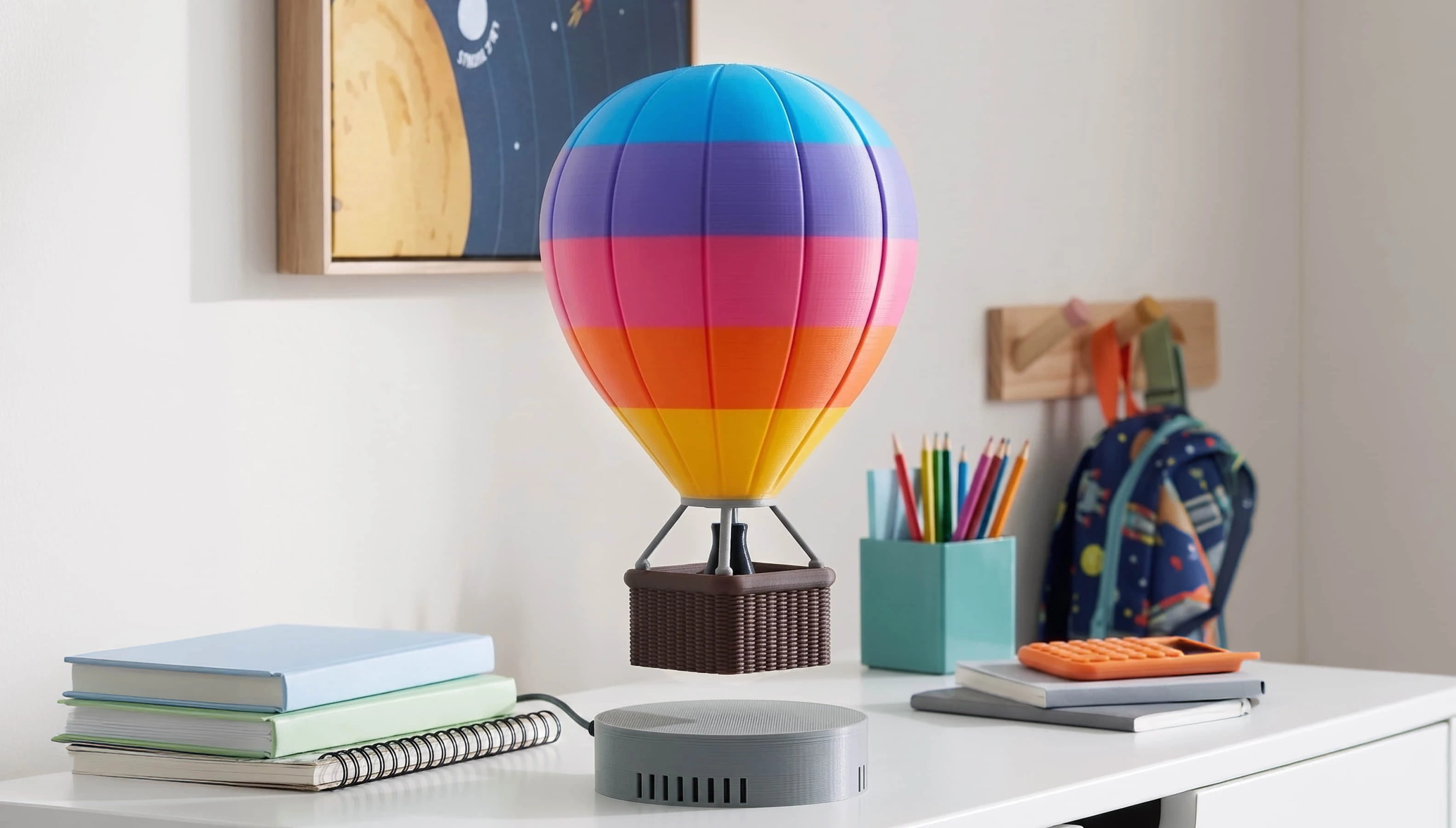
AMS support from the Bambu Lab A2L
For many users, AMS support is an important reason to choose Bambu Lab. Multicolor printing is growing rapidly in popularity. Automatic filament changes make large prints much easier. That is why the AMS support of the Bambu Lab A2L receives a lot of attention.
According to the official media kit, the Bambu Lab A2L supports multiple AMS systems simultaneously. The printer works with the AMS Lite, AMS 2 Pro, and AMS HT. Additionally, the A2L supports up to four AMS units plus one extra AMS Lite. This allows users to use up to 19 colors or materials at the same time.
This offers significant advantages for makers of large multicolor prints. The printer automatically switches filament during printing. As a result, manual intervention is required less often. This saves a lot of time, especially for prints lasting tens of hours.
What is the Bambu Lab AMS system?
AMS stands for “Automatic Material System”. This system automates the loading and changing of filament. The printer automatically switches between different colors or materials.
That makes many applications possible. Consider:
- multicolor models
- prints with support material
- automatic filament backup
- combinations of flexible and rigid materials
- decorative prints with multiple colors
The AMS system now plays a major role in the success of Bambu Lab. Many users consciously choose this ecosystem. Beginners, in particular, appreciate the simple way of multicolor printing.
AMS Lite support
Many users are familiar with the AMS Lite from the Bambu Lab A1 series. This system is more compact than the larger AMS units. Nevertheless, it supports automatic filament changes for multiple colors.
According to the media kit, the A2L also works with the AMS Lite. This is convenient for users who already own an A1 printer. They can continue using existing hardware.
The AMS Lite focuses primarily on:
- beginners
- hobbyists
- users with limited space
- simple multicolor prints
In addition, the price is usually lower than for larger AMS systems. As a result, the system remains accessible to new users.
AMS 2 Pro
The new AMS 2 Pro is aimed at more intensive use. An important difference is the active moisture control. According to previous information from Bambu Lab, the AMS 2 Pro uses active drying and moisture control.
That helps especially with hygroscopic filaments such as:
- PETG
- TPU
- Nylon
- PVA
Damp filament often causes problems. These include poor layer adhesion, stringing, and weak prints. Some filaments even make audible popping sounds during printing.
The AMS 2 Pro attempts to reduce these problems by actively keeping filament dry. This is especially important for large prints with long print times. The longer a print takes, the more important stable filament conditions become.
AMS HT
In addition to the AMS Lite and AMS 2 Pro, the A2L also supports the AMS HT. This AMS seems primarily intended for technical filaments and higher temperatures.
The A2L is not a fully enclosed high-temperature printer like the X2D. Nevertheless, the AMS HT offers additional capabilities for users experimenting with advanced materials.
The AMS HT presumably focuses on:
- higher filament temperatures
- better moisture control
- technical filaments
- long-term storage
This can be interesting for engineers and product developers. Functional prints, in particular, benefit from stable material conditions.
Up to 19 colors at once
A notable feature of the media kit is the support for up to 19 colors or materials simultaneously. This is achieved by combining multiple AMS units.
This creates possibilities that are normally only available on much more expensive systems.
Consider, for example:
- large cosplay parts
- complex decorative models
- signage and logos
- educational models
- prints with multiple support materials
For large prints, automatic material change makes a huge difference. Manually changing filament during long prints takes a lot of time and increases the risk of errors.
Why AMS is so important for the A2L
The combination of a large build volume and extensive AMS support makes the A2L remarkably interesting. Many large printers focus primarily on functional applications. The A2L, however, seems designed for creative projects.
The printer focuses on, among other things:
- large colorful models
- creative projects
- educational applications
- maker communities
- content creators
Bambu Lab has strongly integrated the AMS system into the ecosystem. As a result, the user experience remains relatively simple. This constitutes a significant advantage over competitors. With many other printers, multicolor printing still feels complex or unreliable.
For users who want to create large, colorful prints without complicated settings, AMS ultimately looks set to become one of the Bambu Lab A2L's strongest points.
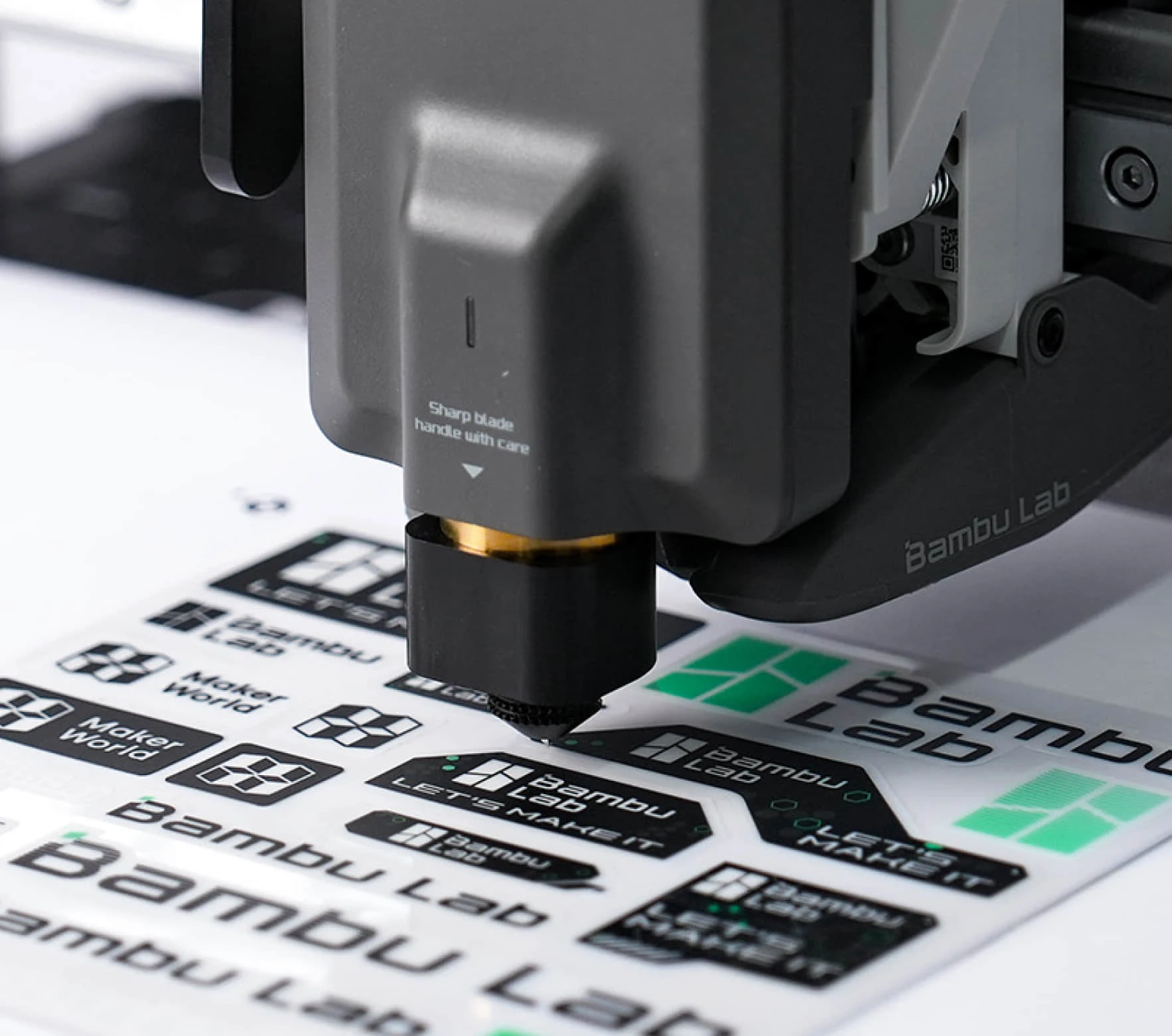
Blade Cutting Module and Pen Module
With the Bambu Lab A2L, Bambu Lab looks beyond standard 3D printing. The printer supports additional modules. The best-known extensions are the Blade Cutting Module and the Pen Module.
As a result, the A2L transforms into a creative all-in-one machine. You can not only print, but also cut and draw. This makes the printer interesting for a wider group of users.
According to the official media kit, the A2L supports interchangeable modules for cutting and drawing. With this, Bambu Lab targets hobbyists, schools, makerspaces, and small design studios.
What is the Blade Cutting Module?
The Blade Cutting Module cuts the A2L materials instead of printing them. As a result, the printer functions partly as a digital cutting plotter.
The module uses a 45-degree blade. According to the media kit, the system cuts materials up to 0.5 millimeters thick. Additionally, the machine supports various cutting mats, including LightGrip and StrongGrip mats.
This feature offers a major advantage. Users no longer need a separate plotter for simple creative projects. One machine performs multiple tasks.
That makes the A2L attractive to users with limited workspace. Moreover, beginners need to buy fewer devices.
Which materials does the module support?
According to the media kit, the Blade Cutting Module supports multiple thin materials:
- paper, vinyl, PVC, leather, cardboard and sticker material
- stickers, decals, stencils and packaging
- cosplay parts, labels and educational projects
Vinyl, in particular, could become popular among small business owners. Users can create logos, window stickers, and product labels. Leather also offers possibilities for creative projects and cosplay builds.
Why this is interesting for makers
Many makers combine multiple techniques within a single project. A cosplay build often uses printed parts, but also stickers, stencils, and leather details.
Normally, that requires multiple machines. Bambu Lab tries to simplify this workflow. The A2L combines various functions within a single ecosystem.
That saves space and lowers the barrier to entry for beginners. Hobbyists and schools, in particular, can benefit from this.
According to the media kit, the Blade Cutting Module supports a working area of up to 500 by 500 millimeters. That is large for a desktop machine. This allows users to process larger designs, such as wall decoration, shirt transfers, and large stencils.
What does the Pen Module do?
In addition to cutting, the A2L also supports drawing. With the Pen Module, the printer partially transforms into a drafting machine or plotter.
According to the media kit, the module supports pens between 10.5 and 12.5 millimeters thick. Additionally, the system works with bitmap and vector files. As a result, the machine can automatically create illustrations and technical drawings.
The Pen Module opens up new applications once again. Think of illustrations, architectural sketches, maps, and graphic experiments.
This feature can be particularly interesting for schools. Students learn to work with digital production without complex CAD software. Artists can also experiment with generative art and large physical drawings.
Interesting for schools and makerspaces
The modules make the A2L attractive for education and creative workshops. Traditional 3D printers often focus solely on technology lessons. The A2L also supports art, design, and STEAM projects.
As a result, a single device can fulfill multiple roles within a classroom. This increases flexibility for schools and makerspaces.
It is striking that Bambu Lab opts for a blade module instead of a laser. This appears to be a deliberate choice. A blade system is safer, cheaper, and easier to deploy in schools. Moreover, it requires less ventilation and regulation.
With this, Bambu Lab clearly focuses on accessibility and ease of use. The Blade Cutting Module and Pen Module demonstrate that the A2L aims to be much more than an ordinary 3D printer.

Bambu Lab A2L versus A1
Many users compare the Bambu Lab A1 with the new Bambu Lab A2L. That makes sense. The A1 quickly became popular. The printer offers ease of use, high speed, and simple installation.
The A2L, however, appears to be more than just a larger A1. Bambu Lab adds new technologies and creative features. In doing so, the brand focuses on more than just a larger print bed.
The most important differences between both printers are clearly listed side by side below.
| Characteristic | Bambu Lab A1 | Bambu Lab A2L |
| Building volume | 256 × 256 × 256 mm | 330 × 320 × 325 mm |
| AMS support | AMS Lite | AMS Lite + AMS 2 Pro + AMS HT |
| Maximum number of colors | 4 colors | Up to 19 colors/materials |
| Extruder type | Standard direct drive | PMSM Servo Extruder |
| Adaptive Vibration Compensation | Basic compensation | Advanced adaptive compensation |
| Granular Dampers | No | Yes |
| Nozzle Clumping Detection | Limited | Yes |
| Blade Cutting Module | No | Yes |
| Pen Module | No | Yes |
| Camera | Yes | 1080P camera |
| Max nozzle temperature | 300°C | 300°C |
| Maximum print speed | 500 mm/s | 500 mm/s |
| Target group | Beginners and hobbyists | Large creative and functional projects |
What stands out immediately is the larger build volume of the A2L. As a result, users are less likely to run into limits. Large cosplay parts, organizers, prototypes, and RC projects fit into a single print more often.
The A2L also features new technologies for large and heavy prints. Adaptive Vibration Compensation and Granular Dampers reduce vibrations and ghosting at high speeds. This can significantly improve print quality.
AMS support is also receiving an upgrade. The A1 focuses primarily on AMS Lite. The A2L supports multiple AMS systems simultaneously. According to the media kit, users can combine up to 19 colors or materials.
The Bambu Lab A2L 3D Printer is also equipped with a Blade Cutting Module and Pen Module. As a result, the printer partially transforms into a creative maker machine. Users can not only print, but also cut and draw. This makes the printer interesting for hobbyists, schools, and makerspaces.
However, the A2L is not automatically the best choice for everyone. The A1 remains attractive to users looking for a compact and affordable printer. Many users do not need a larger build volume or extra modules.
The A2L is primarily aimed at makers who want more freedom. They can grow without immediately buying a high-end system, such as the Bambu Lab X2D or P2S.
Who is the Bambu Lab A2L suitable for?
The Bambu Lab A2L targets many types of users. The printer combines ease of use with extensive printing capabilities. As a result, it suits both hobbyists and semi-professional makers.
The large build volume plays a major role in this. AMS support and creative modules also make the printer versatile. This distinguishes the A2L from the compact A1 and the advanced X2D.
Cosplay
The A2L seems ideal for cosplayers. Large parts often pose a problem with smaller printers.
Components such as helmets, armor, and weapons often have to consist of multiple parts. Users must then glue and sand those parts. This takes a lot of time and sometimes leaves visible seams.
With a build volume of 330 × 320 × 325 mm, the A2L prints larger parts in a single piece. Helmets, in particular, benefit from this.
AMS support also helps with multicolor prints. This makes it easier to add color accents, logos, and details.
The Blade Cutting Module offers additional possibilities. Cosplayers can use it to cut out vinyl, stencils, and foam patterns.
Makerspaces
Makerspaces need versatile machines. The A2L seems to fit that environment well.
Users often have different levels and goals. Some make simple decorations. Others build technical prototypes.
The A2L supports multiple workflows:
- 3D printing
- multicolor printing
- cutting
- plot
- prototyping
As a result, one machine replaces multiple devices.
The large build volume also helps with group projects. Users need to split models less often.
Automatic functions also increase reliability. This is useful for intensive use.
Schools
Schools can also benefit greatly from the A2L.
Many 3D printers focus primarily on technology lessons. The A2L also supports creative subjects.
The printer combines:
- 3D printing
- Blade Cutting
- Pen plotting
- multicolor printing
As a result, he fits within technology, art, and STEAM projects.
Moreover, Bambu Lab opts for safe expansions. This makes the printer more suitable for classrooms.
The large building volume also helps with larger educational projects.
Engineers
The Bambu Lab A2L is not an industrial printer. Nevertheless, it offers interesting features for engineers.
The large build volume enables larger prototypes without additional assembly.
That helps with:
- test housings
- machine parts
- concept models
- ergonomic prototypes
- presentation models
The printer supports speeds of up to 500 mm/s. As a result, iterations proceed faster.
The PMSM Servo Extruder also helps technical users. Stable extrusion increases accuracy during long prints.
Product development
In product development, everything revolves around speed. Teams must test and adapt ideas quickly.
The A2L aligns well with that workflow.
Thanks to the large build volume, designers produce larger mockups in one piece. As a result, they assess how a product looks and feels more quickly.
AMS support also helps with:
- color prototypes
- branding mockups
- demo models
- presentation products
The A2L therefore forms a strong middle ground between consumer printers and professional systems.
Not just for experts
The Bambu Lab A2L remains accessible despite all the technology.
Many large printers focus primarily on experts. Bambu Lab, on the other hand, places a strong emphasis on automation and ease of use.
As a result, the printer is well-suited to users who:
- want more space than the A1 offers
- making large creative projects
- want to combine multiple techniques
- do not need a professional system yet
It is precisely that combination that makes the A2L remarkably versatile.
Possible disadvantages of the Bambu Lab A2L
The Bambu Lab A2L offers many new features. However, no 3D printer is perfect. Therefore, it is wise to also take a critical look at the disadvantages. This way, you can determine more quickly whether this printer truly suits your needs.
No closed housing
The A2L uses an open-frame design. This differs from models such as the Bambu Lab X2D and Bambu Lab P2S. The design looks more like the Bambu Lab A1.
An open printer is easier to maintain and often cheaper. However, this design also has clear limitations. The printer is more sensitive to drafts and temperature fluctuations. As a result, problems such as warping or layer separation occur more quickly. Dust also gains easier access to the printer.
With PLA and PETG, this usually does not pose a major problem. However, technical filaments require more stability. Additionally, an open printer often produces more noise.
Less suitable for technical materials
The Bambu Lab A2L supports a nozzle temperature of 300 degrees. However, that does not automatically mean that all filaments work without problems.
The printer does not have a heated enclosed chamber. As a result, it performs less well with materials such as ABS, ASA, nylon blends, and other engineering filaments. These materials require a stable ambient temperature to prevent cracking and deformation.
As a result, the A2L focuses primarily on PLA, PETG, TPU, and creative applications. For hobbyists, that is usually sufficient. Professional users might prefer a system such as the X2D or P2S.
No dual nozzle system
The A2L uses only one active nozzle. As a result, filament changes remain necessary during multicolor prints.
For complex prints, this results in longer print times and extra purge material. Filament consumption also increases. A dual nozzle system works more efficiently because multiple materials remain immediately available.
For most hobbyists, this does not pose a major problem. However, avid multicolor users should take this into account.
No laser function
The Bambu Lab A2L 3D Printer does not support a laser function. As a result, applications such as laser engraving or cutting wood and acrylic are not possible.
Some makers will find this unfortunate. After all, multifunctional machines are becoming increasingly popular. However, Bambu Lab seems to have made this choice deliberately. A laser system requires extra safety measures and ventilation.
As a result, the printer remains more accessible to schools, home users, and makerspaces.
Large format requires more space
The large build volume is one of the biggest advantages of the A2L. At the same time, this means the printer requires more space.
The printer is well over half a meter wide and deep. Additionally, you need extra space for cables, AMS systems, ventilation, and maintenance. Users with limited workspace should take this into account.
Large prints cost more
Larger prints automatically require more material and more time. As a result, filament costs and power consumption also increase.
Moreover, long prints entail greater risk. A failed print lasting tens of hours costs significantly more material than a small PLA print. Therefore, features such as vibration compensation and error detection become particularly important.
More expensive than an A1
With a price tag of €409.95, the Bambu Lab A2L is approximately €120 more expensive than the regular A1.
For users who primarily print PLA and rarely encounter the build volume of the A1, the A1 therefore remains an attractive alternative. After all, with the A2L you are paying not only for extra print space, but also for new technologies such as the PMSM Servo Extruder, Adaptive Vibration Compensation, Granular Dampers, and support for creative modules.
For users who regularly print large models, however, that extra cost can be quickly recouped. Fewer parts need to be split, resulting in less gluing, less post-processing, and less chance of visible seams.
Are these disadvantages really important?
Probably not for most users.
Many limitations stem from deliberate choices made by Bambu Lab. The A2L does not attempt to be an industrial machine. The focus lies primarily on a large and creative desktop printer.
As a result, the printer seems particularly suitable for creative projects, cosplay, multicolor prints, schools, and makerspaces. For heavy industrial applications, better alternatives likely exist.
Frequently asked questions about the Bambu Lab A2L
What is the Bambu Lab A2L?
The Bambu Lab A2L is a large open-frame FDM 3D printer from Bambu Lab. The printer combines a large build volume with new technologies such as a PMSM Servo Extruder, Adaptive Vibration Compensation, and support for AMS systems.
When does the Bambu Lab A2L come out?
Bambu Lab has officially announced the A2L, but exact global availability may vary by region. It is advisable to keep an eye on official release updates from Bambu Lab and local resellers.
How much does the Bambu Lab A2L cost?
The Bambu Lab A2L costs €409.95 including VAT for the version without AMS Lite.
The Bambu Lab A2L Combo costs €529.95 including VAT and comes with an AMS Lite for automatic multicolor printing.
How big is the Bambu Lab A2L?
The Bambu Lab A2L has a build volume of 330 × 320 × 325 mm. This makes the printer one of the larger desktop 3D printers within the current Bambu Lab range.
Is the Bambu Lab A2L larger than the A1?
Yes. The A2L offers significantly more print volume than the A1. As a result, larger objects such as cosplay helmets, organizers, and prototypes can often be printed in one piece.
Does the Bambu Lab support A2L AMS?
Yes. According to the media kit, the A2L supports multiple AMS systems, including AMS Lite, AMS 2 Pro, and AMS HT.
How many AMS units does the A2L support?
The A2L supports up to four AMS units plus one additional AMS Lite. This allows up to 19 colors or materials to be available simultaneously within the ecosystem.
Does the Bambu Lab A2L support multicolor printing?
Yes. Thanks to AMS support, the A2L can automatically switch between multiple colors or materials during printing.
What is the maximum print speed of the A2L?
According to the specifications, the Bambu Lab A2L supports print speeds of up to 500 mm/s. The actual speed naturally depends on the model, filament, and the desired print quality.
Does the Bambu Lab A2L have a closed housing?
No. The A2L uses an open-frame design. As a result, the printer is less suitable for some technical materials that require a heated enclosed chamber.
Which materials does the Bambu Lab A2L support?
The printer supports PLA, PETG, TPU, and PVA, among others. In addition, the A2L also supports certain composite filaments such as PLA-CF and PETG-CF.
Is the Bambu Lab A2L suitable for TPU?
Yes. According to the specifications, the printer supports TPU filament. The new Servo Extruder may potentially help process flexible filaments more stably.
Does the Bambu Lab A2L have a camera?
Yes. The printer features a built-in 1080P camera with support for time-lapses and monitoring.
What is the PMSM Servo Extruder?
The PMSM Servo Extruder is a new extruder technology in which the printer actively monitors filament resistance and position. This allows the printer to respond more quickly to extrusion problems or deviations.
What does Adaptive Vibration Compensation do?
Adaptive Vibration Compensation actively attempts to reduce resonance, ghosting, and ringing during printing. This is especially important for large prints and high speeds.
What are Granular Dampers?
Granular Dampers are physical vibration dampers integrated into the frame of the A2L. These help absorb vibrations to improve print quality.
What is the Nozzle Clumping Detector?
The Nozzle Clumping Detector checks whether filament is accumulating around the nozzle. This allows the printer to intervene more quickly when a blob or blockage occurs.
Does the Bambu Lab A2L have a dual nozzle system?
No. The A2L uses one active nozzle. Multicolor printing is done via filament changes using the AMS system.
What is the Blade Cutting Module?
The Blade Cutting Module is an extension that allows the A2L to cut materials such as paper, vinyl, PVC, and leather. As a result, the printer functions partially as a cutting plotter.
Which materials can you cut with the Blade Module?
According to the media kit, the Blade Cutting Module supports paper, vinyl, PVC, leather, and similar thin materials, among others.
What is the Pen Module?
The Pen Module transforms the A2L into a drawing or plotting machine that allows designs and illustrations to be drawn automatically.
Is the Bambu Lab A2L suitable for beginners?
Yes, Bambu Lab is known for user-friendly printers with a lot of automation. Despite the new features, the A2L seems to remain relatively accessible to new users.
Is the Bambu Lab A2L better than the A1?
That depends on your use case. The A2L offers a larger build volume, more extensive AMS support, and new creative features. The A1 likely remains more interesting for users looking for a more compact and cheaper printer.
Does the A2L support Linux?
Yes. According to the specifications, Bambu Studio supports Windows, macOS, and Linux.
Does the Bambu Lab A2L have Ethernet?
No. The printer supports Wi-Fi, but not an Ethernet connection.
For whom is the Bambu Lab A2L particularly interesting?
The A2L seems particularly interesting for cosplayers, makerspaces, schools, product developers, and users who want to create larger creative or functional prints without immediately purchasing a full professional system.
Conclusion
The Bambu Lab A2L appears to be one of the most interesting new 3D printers from Bambu Lab. The model is more than just a larger version of the Bambu Lab A1. Bambu Lab opted for a new platform focusing on large projects and smart automation.
The build volume of 330 × 320 × 325 mm offers many advantages. Users print large models directly in one piece. This works well for cosplay helmets, organizers, RC projects, and prototypes.
The Bambu Lab A2L 3D Printer also uses new technologies for fast and stable prints. The PMSM Servo Extruder increases control during printing. Adaptive Vibration Compensation and Granular Dampers reduce vibrations. Nozzle Clumping Detection helps prevent problems more quickly.
The AMS support makes the printer particularly interesting. Users can connect up to four AMS units and one AMS Lite. According to the media kit, the system supports up to 19 colors or materials. This offers many options for multicolor prints and creative projects.
The Blade Cutting Module and Pen Module make the printer more versatile. Users can not only print, but also cut and draw. As a result, the A2L feels more like a complete maker machine.
However, the printer has limitations. The open-frame design works less well for high-temperature materials. The printer also lacks a dual nozzle or laser function.
These choices seem to have been made deliberately. Bambu Lab clearly targets makers, schools, and hobbyists. The A2L offers more freedom without the price of a high-end system.
For users looking for a large build volume, AMS support, fast prints, and creative features, the Bambu Lab A2L seems like a strong choice.
Ultimately, practice will show how well the printer performs. Nevertheless, the A2L already appears to be one of the most interesting large consumer printers of the moment.
With a price of €409.95, Bambu Lab positions the A2L remarkably competitively in the market, making it ideal for anyone looking to buy a 3D printer. For only a limited additional cost compared to the A1, you get a significantly larger build volume, new extruder technology, and support for creative extensions such as the Blade Cutting Module and Pen Module.
As a result, the A2L appears to offer one of the most interesting price-performance ratios within the current Bambu Lab range.